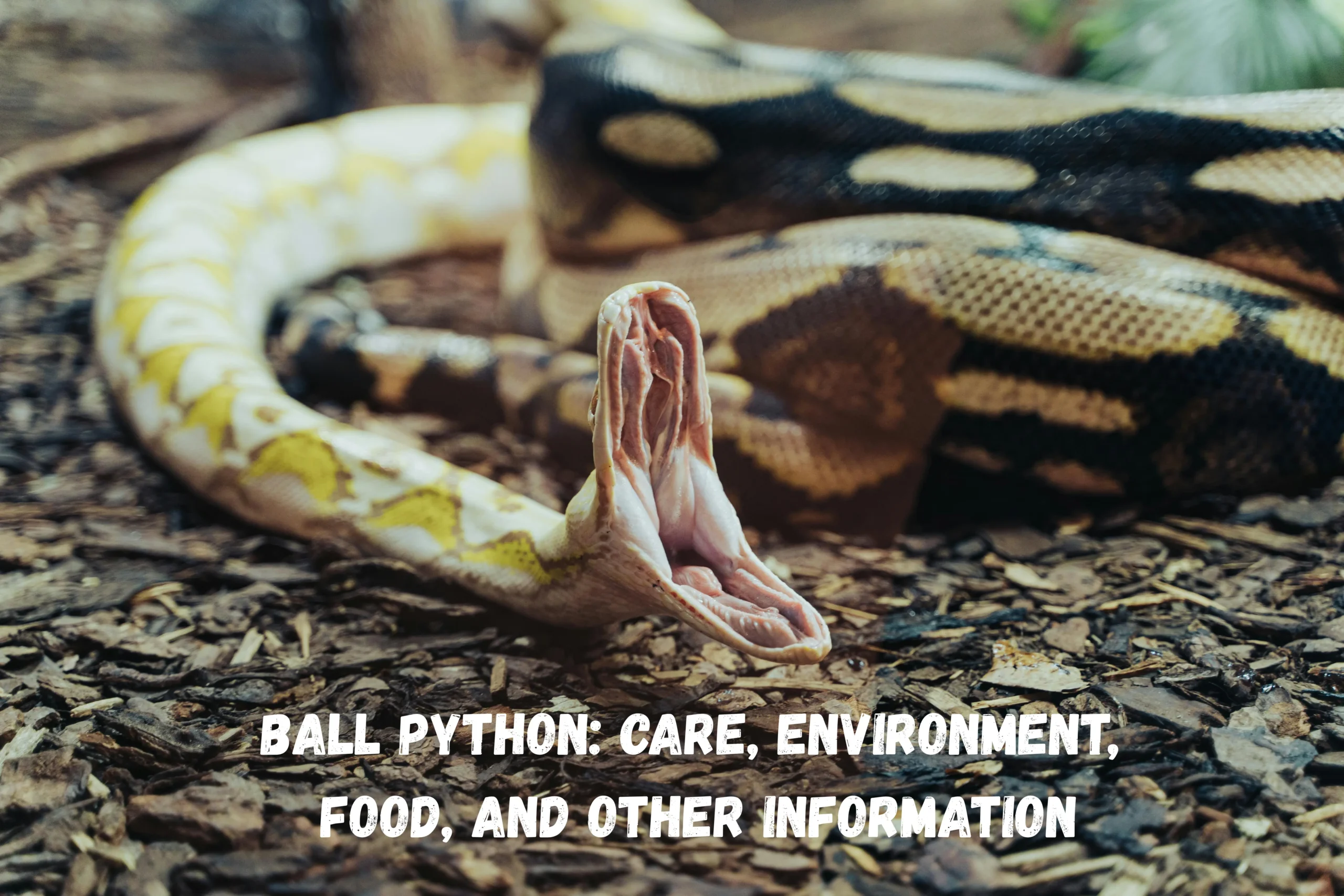
Many people keep Ball Pythons as pets because of their small size and docile nature, making them one of the most popular pet snakes.. In the wild, they are located in West and Central Africa, and when they feel danger, they defensive coil into a ball. This unique behavior is why people call them Ball Python. Reptile enthusiasts commonly select Ball Pythons as their first pet snakes due to the species’ calm nature, ease of handling, and relatively uncomplicated care in comparison to other types of reptiles. If you are considering adopting a Ball Python or you would just like to learn more about them, it is important to understand how to care for them, their environment, their food, and their behavior.
What is a Ball Python?
Ball Pythons are part of the family Pythonidae and are therefore a type of Python. The scientific name for the Python regius. People also call this species the Royal Python because many believe that African royalty once wore these snakes as accessories.
The ballis a popular choice for first-time snake owners because of the species’ small size, docile temperament, and slow movement. The gentle nature and easy going personality of the ball python, allows them to be a great choice for new reptile enthusiasts.
Key Characteristics
- Non-venomous constrictor snake
- Average length: 3–5 feet
- Lifespan: 20–30 years in captivity
- Origin: West and Central Africa
- Known for balling up into a ball when scared.
- Natural habitat of the Ball python
The ball python is a terrestrial (ground-dwelling) snake that lives in plains, grasslands, and lightly wooded areas. These environments provide the warmth and shelters that the snake needs in order to survive.
When in the wild, ball pythons prefer to conceal themselves in the burrows of small rodents. These hiding places provide a safe shelter from predators and help the snake to thermally regulate. The ball python confines their activity to the warm hiding places and shelters where they will be safe from predation.
Ideal Ball Python Habitat
Ball pythons prefer environments that meet the following conditions.
1. Warm temperatures anywhere between 75–95°F (24–35°C)
2. Stable humidity levels around 50–60%
3. Abundant hiding spots (i.e. logs, rocks, and burrows)
At night, ball pythons leave their hiding spots in search of prey, because of their nocturnal nature.
Varieties of Ball Pythons
Endless possibilities of color and pattern morphs are available in ball pythons. With selective breeding, reptile breeders have created hundreds of distinct morphs, each with their own unique arrangements of colors and patterns.
Typical Characteristics of the Wild Type Ball Python
The ball python’s natural wild-type coloration features;
- a dark brown or black base color,
- light brown or gold blotches,
- a brown, white, or cream belly
Common Ball Python Morphs
Common ball python morphs include;
- Albino Ball Python – Bright white and yellow coloration
- Piebald Ball Python – Large patches of white on the body
- Pastel Ball Python – Lighter yellow
- Spider Ball Python – Various web patterns
- Blue Eye Leucistic Ball Python – Almost completely white with blue eyes
These morphs have increased the popularity of the Ball Python within the reptile trade market.
Length and Lifespan of Ball Pythons
Typically, a fully grown ball python can lengthen out to span between three and five feet, with females typically outgrowing males.
Growth Timeline
Age Averaged Length Hatchling – 10- to 17-inches 1 year – 2 to 3 feet Adult – 3- to 5-feet
With sufficient care, Ball Pythons are able to thrive in captivity for 20 to 30 years, with some able to outlive this range.
Religion of Ball Pythons
Ball Pythons are obligate carnivores, with wild and domesticated diets that vary slightly;
In regard to their wild diet, they tend to prey on;
- Rats
- Mice
- Small birds
- African soft-furred rats
Owners typically feed domesticated Ball Pythons frozen-thawed prey.
Feeding Guidelines
Individuals should be fed rodents that have been frozen and thawed because live rodents can injure the snake.
Feeding frequency is based on life stage:
Hatchlings: every 5-7 days
Juveniles: every 7-10 days
Adults: every 10-14 days
Ball Python Temperament and Behavior
The Ball Python is known for having a calming presence as it rarely displays aggression toward human interaction.
When threatened, Ball Pythons will roll into a ball, hiding their heads in the center, to avoid predation. This is the defensive posture which Ball Pythons attained their name from.
Typical Behaviors
- Curls into a ball when threatened
- Freezes when being handled
- Predatory behavior is exhibited primarily at night
- Burrowing and hiding behavior is exhibited
- Due to the aforementioned behaviors, ball pythons have become the most common pet snake.
Ball Python Care Guide
Providing adequate care is crucial for the health and well being of a Ball Python while in captivity.
Set Up for Enclosure
The enclosure used should have the following:
- A 20-40 gallon tank for adult pythons
- Secure lid to prevent escape
- Two hiding spots (one on the warm side, one on the cool side)
- A water bowl that is large enough to accommodate the snake for a soak
- Providing Heat to Your Ball Python’s Enclosure
- Ball pythons require a temperature gradient in their enclosures.
- The warm side of the enclosure should be kept between 88-92°F.
- The cool side of the enclosure should be kept between 75-80°F.
- Heat can be provided using heat mats or ceramic heat emitters.
- Humidity
- Humidity should be kept to 50- 60% and can be higher during shedding.
Substrate Options
Common substrates include:
- coconut fiber
- aspen bedding
- cypress mulch
- paper towels (for easier cleaning)
Ball Python Shedding Process
Like all snakes, the Ball Python shed their skin as they grow. This process is called ecdysis.
Signs of shedding include:
- dull skin color
- cloudy or blue eyes
- reduced appetite
Practise sheding usually last 7- 14 days.
Keeping suffacient humidity is vital as it can impact the snakes ability to shed his skin in one complete piece.
Common Health Problems in Ball Python
Ball Pythons are hardy snakes, but they can develop health problems. Health problems that are usually seen include:
- viral and bacterial infections
- poor nutrition and husbandry are usually the cause of health problems.
Is a Ball Python a Good Pet?
For reptile enthusiasts, the Ball Python is a great pet.
Some factors that make people appreciate ball pythons include the following:
- ball pythons are calm
- ball pythons are small
- ball pythons live long lives
- ball pythons come in hundreds of morphs
- ball pythons are easy to take care of
Prospective pet owners should realize that ball pythons are a long-term commitment and require a careful living situation.
Final Thoughts
Ball pythons are one of the best snakes for beginners. Their temperament and size, combined with hundreds of morphs, make them incredibly appealing to beginners and seasoned herpetologists alike.
To provide a ball python with a long and healthy life, make sure that you understand the care, feeding, and habitat requirements of the species of ball python that you have.
Ball Python FAQs
Are ball pythons safe?
While they are generally docile snakes, ball pythons may still bite if a handler is not careful.
How big do ball pythons get?
Ball pythons typically grow to be about 3-5 feet long, but females may get larger than that.
How often can you feed a ball python?
Depending on the size and age of the ball python, it may need to be fed every one to two weeks.
Do ball pythons enjoy being handled?
Most Ball Python snakes withstand being handled, particularly if they are handled softly and consistently.
What is the lifespan of a ball python?
If cared for properly, a Ball Python can live in captivity for 20-30 years or potentially much longer.