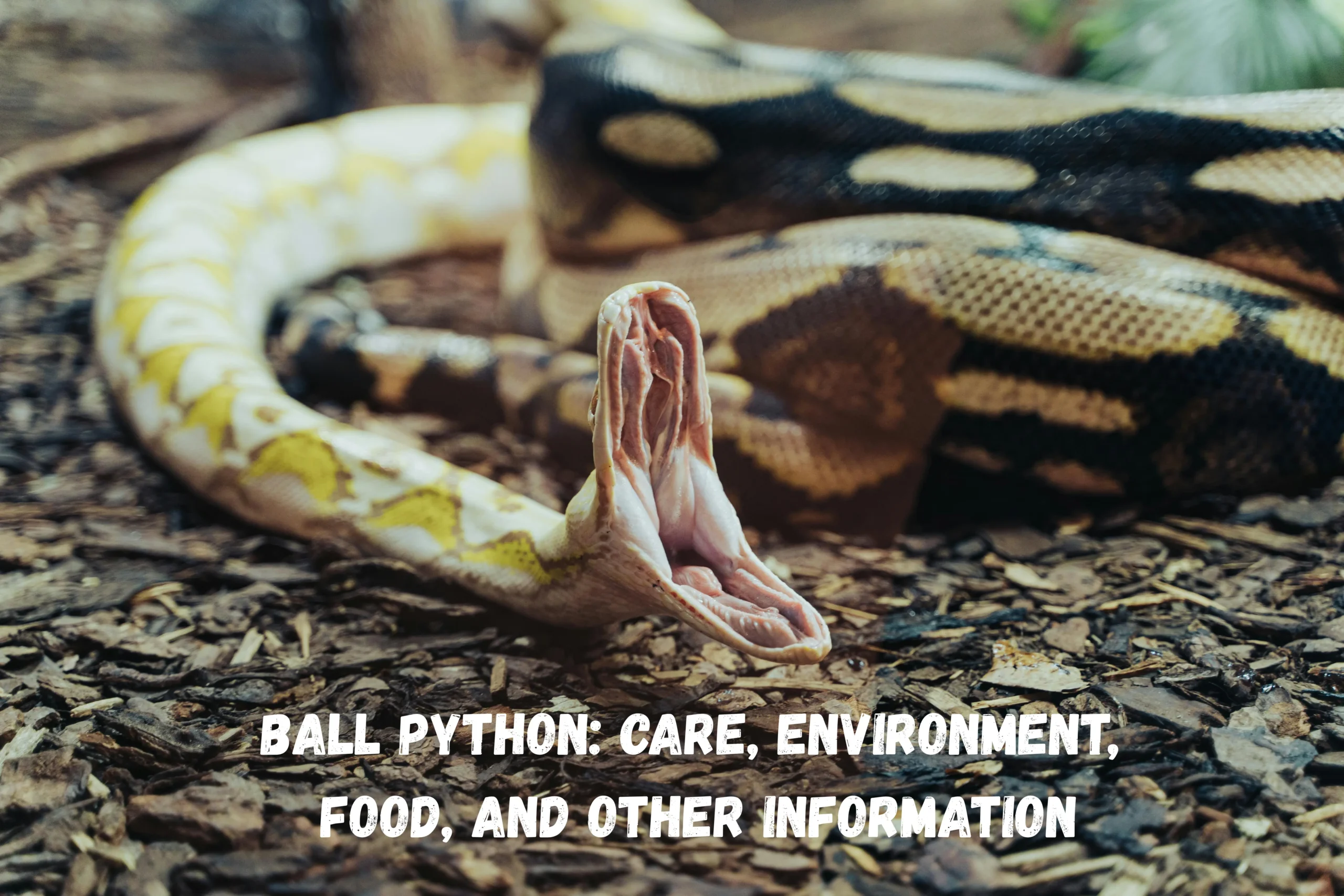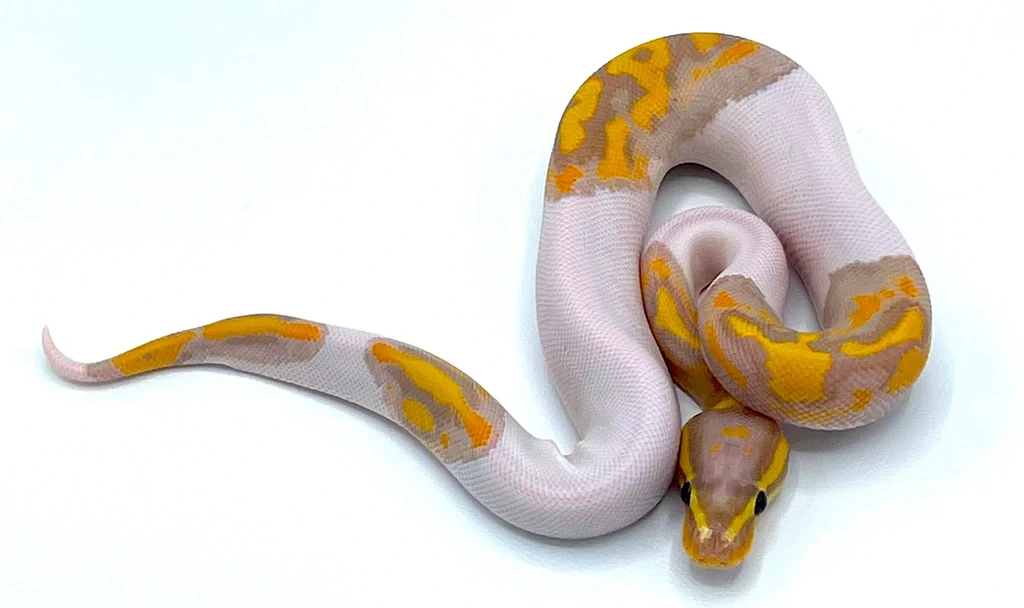
The banana ball python, an appealing morph of ball python, is very popular, and it is very easy to see why. It’s appealing to photographers and to ball python owners because of its striking appearance. Additionally, this morphs is extremely easy to care for and it has strong, bright, healthy coloration. The ball python has been noted to be an owner friendly snake because it has been recorded to show an amenable temperament.
This elaborately constructed, well thought out and considerate guide elaborates on what makes this morph what it is, the associated genetics, how much one might typically expect to pay for one, the basic care requirements, and how one should set up to have an environment so care can be simplified for the optimal thriving of the python for the long run.
What’s a Banana Morph? (Comparing Banana Morphs With Coral Glows)
The term ‘banana morph’ is synonymous with the term ‘coral glow morph.’ One term is typically used by one breeder to refer to a morph, while the other is used by a different vendor. When describing the two morphs, one could say they are describing the same type of color pattern family.
Common Morph Traits for Bananas
- Base Color: Vivid Yellow to Gold
- Secondary Color: Lavender or Purple “Blushing” on Sides
- Pattern: Alien heads that are reduced or softened with a more clean contrast than normals
- Freckling: Small dark speckles that often increase as the snake ages
Freckles are very typical for this morph. They are not mites. They are not scale rot. In fact, many owners appreciate this “ripening” look.
Banana Ball Python Genetics
The genetics behind the **banana ball python are *dominant-like*** (one copy shows the trait), but the important detail is how she passes through males vs. females.
Sex-Linked Inheritance (Why Pairings Matter)
This morph is often referred to by the hobby as sex-linked (linked to the X chromosome). So, your results will vary depending on what parent the banana gene comes from.
Many breeders often simplify the information as follows:
- Banana male x normal female: Usually the result is banana daughters and normal sons
- Banana female x normal male: The result can be banana males and females (approximately equal distribution).
Because of this, particularly for banana male breeding, attention is directed to individual sexing of the snakes.
Is there a super banana?
There is often a super (2 copies) of a morph and the appearance can be quite different. In a banana/coral glow the super is often not that consistent across the hobby. In the end most pet buyers need not worry too much about super labeling and can focus on:
- the general color of the animal
- the pattern and how clean it is
- the other combined genes (pastel, clown, pied, etc.)
The Appearance of Banana Changes with Age
Does the morph fade? The honest answer is no, it changes, but if the husbandry is correct then it does not change in a way that makes it unattractive.
What Usually Happens Over Time
- Yellow coloration may range from lemon to more golden tones.
- Slight changes can occur in lavender tones.
- Increased prominence of nice freckles.
Clean enclosures and color care go hand in hand. Elevated and low-humidity environments affect ball pythons negatively.
Temperament: [Banana] Causes
Morphs alone do not dictate behavior. Snake temperament is largely affected by:
- initial taming
- animal stress and enclosure hostility
- feeding routine
- the specific animal
However, in general ball pythons are very docile. Most will become tolerant with the right environment.
Requirements (The Same Mistakes Can Be Made With Any Ball Python)
The banana ball python has the same basic requirements as all other ball pythons. Setting up the enclosure correctly is most important. Then, maintain appropriate temperature and humidity levels, and make sure the enclosure is escape-proof.
Enclosure Size
- Juvenile: Can begin life in a smaller enclosure, but will need upgrades
- Adult: 4x2x2 ft is a solid long-term benchmark for most adult snakes
Front-ventilated PVC enclosures are more popular than other options because they maintain humidity and minimize stress during handling.
Heating and Temperature Gradient
Ball pythons need a hot end and a cold end as they do not control their body temperature and instead move around.
Good Target Ranges (experienced keepers’ averages)
- Warm side / basking area: ~88–92°F (31–33°C)
- Cool side: ~76–80°F (24–27°C)
Place a thermostat on all heat sources. This is mandatory to avoid fires/overheating.
Common heating options
- Deep Heat Projector (DHP)
- Radiant Heat Panel (RHP) for PVC setups
- Supplementary heat using Ceramic Heat Emitter (CHE)
Humidity
Stable humidity is necessary to achieve clean sheds.
- Baseline ~50–60%
- During shed often works better around 60–70%
Use a hygrometer to monitor humidity and if necessary, add more humidity-friendly substrate (coco fiber, cypress mulch), a large water bowl, a humid hide with damp moss
Do not soak your enclosure. Wrapped substrate/buttons too wet will cause problems to skin.
Hides and Enrichment
Ball pythons hide and feel secure. The concern minimum is 2 hides (one on warm and one on cool) as well as a lot of clutter (fake plants or cork bark) and even optional low branches to help climb.
Emphasis on secure snakes is strong as they usually eat significantly better.
Feeding Guide (Frozen-Thawed Recommended)
For ball pythons, consistency is key, and with consistent husbandry, they will eat more often.
What to Feed
- Mice or rats that have been frozen and thawed (most adults transition to rats)
How Often
General guideline:
- Juveniles: every 7–10 days
- Adults: every 14–21 days
Choose prey that is roughly the size of the snake’s largest width (or slightly bigger, depending on your keeper preference). Do not power feed for size. It will shorten the lifespan and increase the likelihood of obesity.
If Your Snake Refuses Food
Check these first:
- warm side temperature is correct
- hides are snug and the enclosure feels secure
- you are not handling too often
- the snake is not about to shed
Handling: Taming Without Stress
Let a new snake settle for about 7–14 days before routine handling.
Handling rules that prevent most problems:
- keep sessions short at first (5–10 minutes)
- support the body fully
- avoid handling 24–48 hours after feeding
- reduce handling during shedding
If the snake balls up, give it time. Forcing confidence usually backfires.
Price: How Much Does a Banana Ball Python Cost?
Banana Ball Python costs depend on:
- Age and sex
- Visual quality (color, pattern, and freckling)
- Single-gene morph vs combined gene morph
- Breeder reputation and documentation
In broad market terms:
- Single-gene bananas are usually cheaper than rare recessive visuals
- Banana combos (Banana Clown, Banana Pied, Banana Desert Ghost, etc.) can be significantly more expensive
Do not buy on price alone. Look for health, eating reliability, and breeder support.
Buying Checklist: How to Pick a Healthy Banana
When looking for a snake, prioritize health above all else.
Green Flags
- Consistent consumption of frozen-thawed
- Clear eyes (aside from blue phase)
- Clean vent area
- No wheezing, no bubbles, and no open mouth breathing
- Good body condition (not too thin, no visisble spine, not too fat)
Questions To Ask The Breeder
- What is the hatch date?
- What was the last meal and is it frozen-thawed?
- Have there been any refusals or has the snake ever regurgitated?
- What are the snake’s exact genetics? (and proof/track record)?
- Any history with parasites? Any treatments?
If you can, try to get an exotics vet before the snake comes home.
Breeding (For Ethical Keepers)
If you wish to breed later, the banana ball python is frequently used for making high-contrast, high-color projects.
Notable Banana Combos
- Banana Pastel (bright, clean yellows)
- Banana Clown (high demand)
- Banana Pied (dramatic pattern)
- Banana Enchi (pattern enhancement)
Deciding to breed should be an informed, long-term decision. It’s a necessity to have proper racks/enclosures, feeding plans, incubation equipment, and a realistic plan to either sell or keep the babies.
Myths of Banana Morphs
Myth 1:Freckles mean the snake is sick
Freckles are a normal morph trait and are not a sign of illness. Illness is signified by swelling, lesions, stuck sheds, constant soaking, or wheezing.
Myth 2: Bananas always wilt and will become ugly
Although it is true that bananas will wilt due to age, with the right clean environment and humidity, many bananas will show age in a more beautiful way.
Myth 3: Morph means easy care
Morph will not replace your husbandry, and your setup and how you manage it will determine the most.
Quick FAQ
Q: Is this morph beginner friendly?
Yes, assuming you plan on providing the standard ball python temperature and humidity requirements.
Q: Do bananas need any special lights/UVB?
They don’t need UVB like a lot of lizards, but a light cycle is recommended. If you use UVB, make sure it is at a safe level and provide hides, and shading.
Q: Should I house two together?
No. Ball pythons are solitary, and cohabitation will increase stress and feeding problems.
Conclusion
A banana ball python will provide you with remarkable color and will also possess the gentle and easy going personality that makes ball pythons so loved. Focus on a secure enclosure, controlled heat gradient with a thermostat, and consistent humidity. Purchase from a breeder with feeding history and genetics and you should be able to expect a healthy pet for many years.