The Transformation of Retail as Retailers Enter the Fuel Business
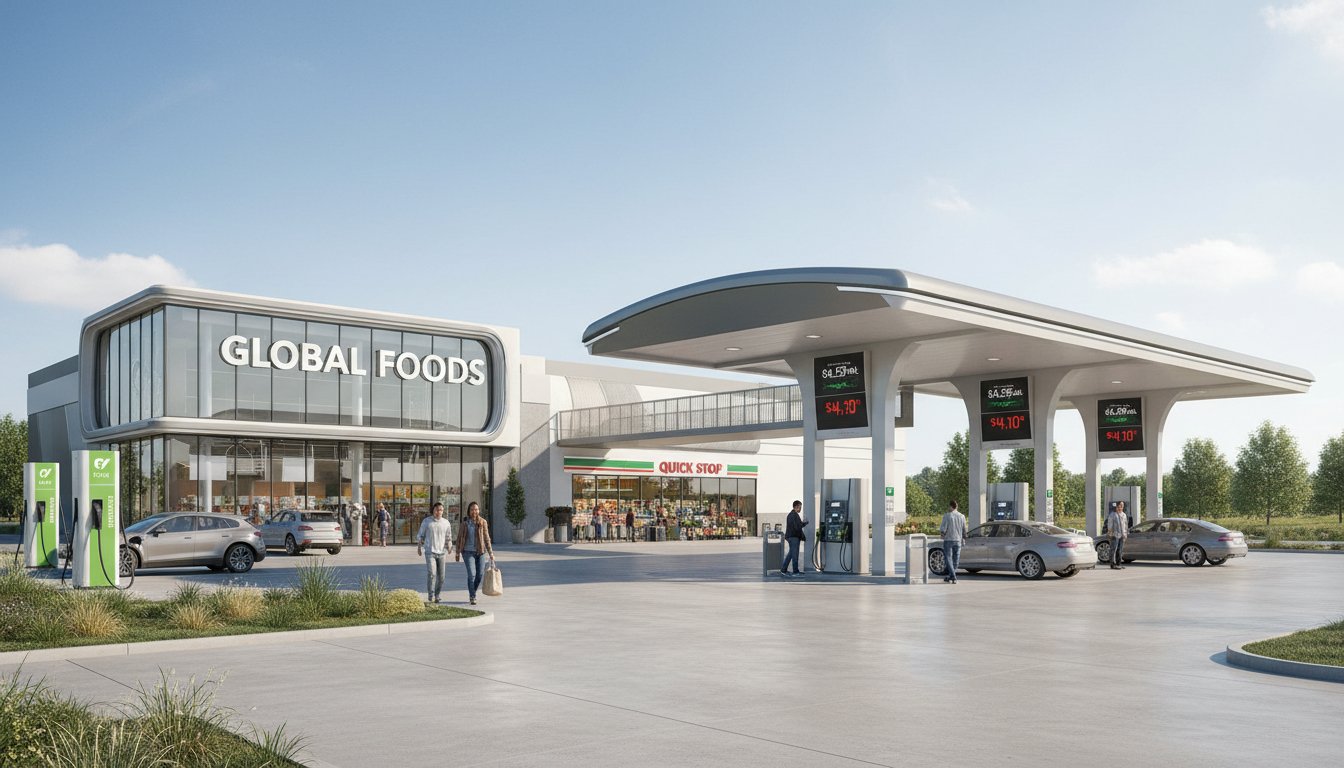
In the last decade, the retail industry has been fueled by the reconfiguration of consumer behaviors, the growing competitive landscape, and the dwindling margins across traditional retail segments. The once feared trend of retailers entering the fuel business to create hybrid business models (meaning convenience stores, supermarkets, big box retailers, and now fuel marts) has occurred and is shifting the retail and energy business.
Retailers entering the fuel business is no longer a novel idea. It has become a well-thought-out strategy for international and domestic fuel and convenience store retailers. The retail and fuel convergence business model responds to shifts in consumer behaviors, including shopping, traveling, and engaging with brands.
Your Text: Fuel Retailing.
Integrating fuel retailing with other services, such as selling groceries, providing convenience goods, food services, and even financial or digital services, can maximize the customer base of a fuel station. Instead of operating fuel stations as separate entities, retailers can incorporate them into their existing environments.
The profit margins on selling fuel are historically very low, but customer traffic is frequent and consistent. Weekly or even more frequent refueling allows customers to engage with the brand multiple times a week. With this consistent behavior, loyalty programs can be activated, merchandise can be sold, and the overall basket value can be increased. In this context, fuel becomes even more valuable, serving as a primary offering or as an ancillary product that enables other, more profitable services.
The owners of fuel station retailers are using supermarkets to land fuel services.
Increased pressure on margins in other areas of Retail
Soaring operating costs, tightening of the e-commerce competition, and the fuel stations provoking the price conscious customers of supermarkets, are all adding retail margin pressures. Retailers entering the fuel business can use fuel retailing to provide an alternative and more consistent lane of revenue stream. With the volume based demand and low margins of the fuel stations, fuel retailing can come to offset the volatility risks associated with retailing other products.
Increased Customer Footfall Through Retailers Entering the Fuel Business
Customers are drawn to retail locations through fuel stations. Customers are likely to enter the store after getting fuel and buy some snacks and drinks or household essentials. They also engage with promotions, making their purchases more profitable. Increased dwell time results in greater sales.
Strengthening Brand Loyalty
Fuel sales integration into the loyalty programs is one of the things retail brands diversifying into the fuel sector do. Customers get fuel discounts, loyalty points, and cashback that is redeemable in-store. This system works to create a self-contained loop with sustained retail fuel intersection visitation and loyalty.
Data and Consumer Insights
Retail insights fuel sales provide is very useful in understanding patterns and frequency of consumer spend. Fuel transactions help retailers tailor offerings, pricing, and stock management in their stores.
Types of Retailers Entering the Fuel Market
Supermarkets and Grocery Chains
The big grocery retailers are currently the most active participants in the fuel industry. Grocery stores with adjoining fuel stations provide a one-stop shop for customers. This convenience is very crucial in ensuring customers choose that grocery store over the competition.
Retail Fuel Merchandising Partnerships
Retail fuel merchandising partnerships describe instances where convenience stores, big-box retailers, and specialty stores integrate fuel sales with their primary retail operations. This is largely because convenience stores, big-box retailers, and specialty stores have fuel sales.
Convenience Retail Fuel Merchandising
Fuel sales are synergistic with convenience retailing. Retail and convenience stores may offer fuel to increase their profit margins from impulse food, beverage, and tobacco purchases. Fuel serves as both a primary traffic driver and as a higher margin product for convenience stores.
Wholesale Fuel Sales
Fuel sales serve as a value proposition for big box retailers and wholesale clubs. Discounted fuel pricing is a retention mechanism for bulk purchasing and incentivizes the membership of wholesale fuel retailing.
Fuel Sales
Fuel retailing is also gaining popularity among specialty and smaller regional retailers, as fuel sales help enhance competitiveness and provide niche retail offerings.
Retailers Selling Fuel
Fuel retailing by retailers also drives more competition and therefore more pricing options for consumers. This often forces the more traditional fuel retailers to innovate, improve the quality of fuel services, and add more diverse services.
At a macro level, the integration of retailing and fuel sales offers more jobs, better fuel services, investment in fuel station infrastructure, and modernizations that provide a larger variety of services and improved cleanliness.
Operational Difficulties in The Fuel Retail Business
Large Initial Financial Outlay
Vital initial costs to consider for the operation of a retail fueling station include land acquisition, installation of a storage tank, safety apparatus, and adherence to regulation compliance. Before delving into the fuel business, retailers entering the fuel business must analyze these factors and clarify what their return on investment will be.
Environmental and Regulatory Factors for Retailers Entering the Fuel Business
With safety and environmental concerns at the forefront, the retail fuel industry must abide by a litany of regulations. Retailers will allocate resources to optimize their compliance, which may take considerable time.
Market Geopolitical and Economic Considerations
Retailers must consider and incorporate the aforementioned factors into their strategy to remain profitable.
Supply Chain Requirements
Retail fueling requires the determination of reliable supply chains, solid relationships with fuel distributors, and the resources to circumvent supply chain disruptions. Brand reputation and customer loyalty hinge on the capacity to maintain supply.
Retail Fuel Digital Integration
A successful retail fuel business must incorporate modern retail technologies. Contactless payment options, digital wallets, and apps enhance speed and convenience. Retailers may also take advantage of software as a service (SaaS) to facilitate pricing adjustments in response to market fluctuations.
Loyalty programs on digital channels allow businesses to offer customized promotions, targeted discounts, and easy reward redemption. Analytics also improve the selection of locations, forecasting of inventory, and customer engagement.
Fuel Retailing’s Future and Sustainability
Transitioning to Alternative Fuels
Sustainability is becoming a global imperative, and fuel retailers expanding service offerings to include non-conventional fuels. Retail locations increasingly offer EV charging stations, biofuels, and hydrogen fuel.
Environmental Responsibility
Retailers are increasingly tasked with reducing their negative environmental impacts. Energy-efficient fuel stations, solar-powered lights, and green building materials are becoming the norm.
Strategically Positioning for the Future
Investing in alternative energy infrastructure is one way retailers are future-proofing their businesses while also aligning with changing consumer sentiment. They are also becoming strategically positioned as early leaders in the changing mobility and energy retail market.
The Increasing Trend of Retailers Offering Fuel Services
Retailers offering fuel services have a steady and growing trajectory on a global scale. In developed economies, the primary focus is on innovation, digitalization, and alternative energy. In developing economies, the expanding availability of fuel services to customers supports increased rates of personal and commercial vehicle ownership and the urbanization of cities.
Cross-border partnerships and acquisitions are becoming increasingly common to help retailers rapidly scale their fuel services and access and leverage existing supply chain networks.
Competitive Advantages for Retailers in the Fuel Sector
Retailers enjoy several unique benefits compared to traditional fuel operators. First, their established customer loyalty, reputation, and location are the fuel operators’ prime real estate and offer an advantage. Second, their merchandising and promotional experience allows fuel retailers to support non-fuel margins greater than the value of fuel.
Risks and Mitigation Strategies
Although the opportunity described above is significant, fuel retailers must identify and manage multiple risks. Operational and financial risks are countered through diversifying fuel types, negotiating long-term supply contracts, developing strong compliance frameworks, and market monitoring.
Frequently Asked Questions (FAQs)
Why are retailers entering the fuel business?
Fuel retailers are offering fuel to increase footfall to their locations, branch out from core services to support multiple revenue streams, defend their brand loyalty, and win market share in a challenging retail environment.
Is fuel retailing profitable for retailers?
Fuel is often considered a loss-leader; the margins are low and the profits are driven from volume. The real value is the additional retail sales which are generated from the traffic produced by fuel sales.
What challenges do retailers face in the fuel business?
For fuel operators, the primary challenges are developing, and maintaining the necessary systems for regulatory compliance, high capital costs, monitoring market conditions, price fluctuations, environmental impact, and supply chain management.
How does fuel retailing benefit customers?
From the customer perspective, the value is in the price, and the convenience of being able to shop at a retail store (or gas station) for all their fueling and shopping needs. Plus, if they have a loyalty program, customers will appreciate the rewards associated with fueling, making it a win-win.
Are retailers financing alternative fuels?
Certainly, as part of the future of mobility, retailers are investing in EV charging stations, biofuels, and other forms of eco-friendly energy.
Conclusion: The Strategic Significance of Retailers Fueling Up
The integration of fuel services into their offerings can be viewed as an innovative strategic development in both the retail and the energy value chain, as it provides greater ecosystem stickiness, facilitates additional monetization streams, and builds competitive advantage in the long term.
Retail fuel services create a unique blend of positive attributes for the retailer, with increased customer visitation, access to customer data and behavior analytics, and the possibility of building loyalty applications. As time goes by, technology becomes more sophisticated, and the fuel of the future becomes more eco-friendly, retailers fuel-oriented business services will be able to rapidly adapt and become more innovative to meet the demands of a more interconnected world.
For More Updates
Visit our website