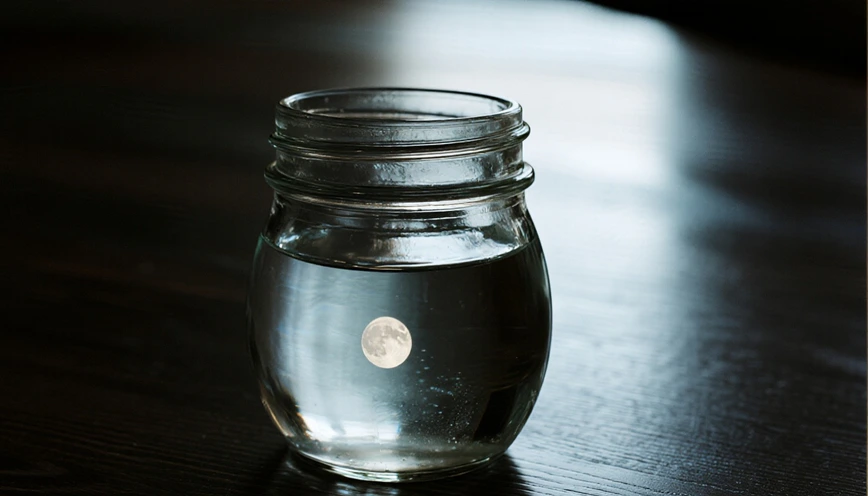
Believe it or not, moon water is just that; water (pretend tap water isn’t a thing) that has been left out to ‘charge’ with moon energy somehow (who knows how it works). Some use it for rituals, meditations, or manifestation practices. Others just think it is a neat tradition (like cousin sun water, but for night).
Moon water is a simple process. From just about every perspective, it is very low-cost, and flexible (we, unfortunately, do not have a charged water under the moon for the customers. However, we do sell customers). This guide gives you the basics, options for moon phases, and hits on a few safety tips to help you moon water with the most swagger possible.
What is Moon Water and What Do People Do With It?
Moon water is water that is placed in moonlight to capture the energies the moon gives off. You can see this practice in a lot of modern-day witchcraft, some forms of spirituality, and self-care rituals. People have different interpretations of moon water based on their culture. For example, most people consider the different phases of the moon to have the following meanings:
- Full Moon: the end of a cycle, let go of things that aren’t serving you, give thanks, and have clarity.
- New Moon: set intentions and start things that you want to grow in the future.
- Waxing Moon: start to build and attract things.
- Waning Moon: let go and simplify things.
Moon water can be used in different ways, some people drink it, some people use it to cleanse ritual tools, or use it to water their plants, take baths, or dress candles.
Important Note: This is a spiritual practice so only do this if you are comfortable with it. If you are going to drink moon water, treat it just like any other water, and do not be reckless with your hygiene.
The Essentials
You won’t need a lot of supplies. The basics are:
- Any Container
- A clean glass mason jar is one common choice.
- Any glass bottle should work.
- Do not use containers that held food with strong odors unless you can remove the odor.
- Some Sort of Water
- Filtered tap water is good enough.
- Spring water is great.
- Distilled water can work as well if you plan on using it in a spray bottle or skincare routine.
- A place that gets moonlight
- If you trust the weather, the outdoors is good.
- You can use a windowsill if some moonlight comes through.
- A label and a pen (recommended)
- The date, moon phase and your intention if you set one.
Optional (but common) additions
- (if you know they’re water-safe) Crystals
- Herbs (culinary-grade if you may ingest the water)
- (symbolic cleansing) A small bowl of salt nearby
- A candle or journal for intention-setting
You can keep it in a very simple jar + water + moonlight.
Step 1: Pick a Moon Phase That Relates Most Closely to Your Goal
Although you can create moon water for any moon phase, the best one to choose is the one that matches what you’re working on.
Moon Water for Full Moons
Typically made for:
- releasing and letting go
- gratitude and celebration
- charging tools or crystals
- clarity and illumination
Full moon water is the most common type because of the popularity of the full moon and all the bright illumination.
Moon Water for New Moons
Typically made for:
- new beginnings
- fresh starts
- intention-setting and manifestation
- building something slowly over time
New moon water is popular because of the symbolism that it carries.
Moon Water for Waxing Moons (between new and full)
Typically made for:
- growth, progress, and expansion
- building habits or momentum
- attraction (love, opportunities, confidence, creativity)
Moon Water for Waning Moons (between full and new)
Typically made for:
- cleansing, simplifying, and decluttering
- rest, reflection, and closure
If you don’t know what to do, the full moon is very simple and straightforward to choose.
Step 2: Decide When to Do This (And How Specific You Want to Get)
Some people set a strict schedule, while others like to keep it a little more easy going. Both are valid!
Easy method
- Set the water out at night
- Take it in in the morning
More old-school method
- Set the water out after the moon comes out
- Take it in before the sun directly hits it (if you want to keep it moon water)
If it happens to get a little morning sun, it’s not the end of the world. If you keep a strict practice, you can set an alarm to take it in early. Otherwise, consider it a part of your life.
Step 3: Wash and Get Your Jar Ready (This Matters)
If you want to drink moon water or use it on your skin, some have some hygiene issues.
- Use hot water and soap to Wash the jar and lid.
- Make sure to Rinse thoroughly to avoid lingering soap.
- Optional: If you plan to keep the water for more than a couple days, this is a good idea. sterilize it.
- If you have heat-safe glass, you may pour boiling water into the jar.
- Or, a dishwasher’s sanitizing cycle.
Either way, make sure it’s completely dry and air-dry it upside down to dry.
Step 4 Add water.
Put whatever water you want into the jar, put the lid on, and now the jar is good to go. A lid is useful because it:
- stops little bugs and stuff from getting in.
- keeps the water clean, especially if the jar is outside.
- helps with storage a lot more.
If you want to keep the jar open as an offering, we suggest you don’t use the water for drinking. You may want to use it for watering plants or for a ritual bath, and make sure to remove it from the area afterwards.
Step 5 (Optional, but the practice really needs it) Set an intention.
If you’d like to intention to be a part of your moon water ritual, you may want to take some time to really think about what this is all for.
Here are some examples of simple intentions:
- “I release what I can’t control.”
- “I welcome calm and clear communication.”
- “I’m building confidence and consistency.”
- “I’m making space for new opportunities.”
You can say it out loud, write it down, or just think about it while holding the jar.
Even if you aren’t an intention person, you can still reflect while making the moon water as time passes, the sky changes, and you create space in your mind.
Step 6: Place It in Moonlight
Now, put your jar where it can get moonlight.
Best Placement Options
- A long table on a patio or deck
- A deck space
- An outdoor zone in a safety spot
- An indoor stowed zone in a window (Sociable people should stow it in their window space or community window)
If you are putting it outside:
- A) Pick a place that is secure as wind may blow it away.
- B) A spot that is protected from animal disturbance.
- C) Bring it in if bad weather is expected (rain Collapse skepticism as it covers water but it is there
To moon water practitioners cloudy cover is not cause to change their practice.
- If it is not a concern leave it out.
- If it is a concern, wait there are 2 options for this.
- Move it to a window to charge (if you believe that)
To assist this process, do these things for inner journaling clarity: – Date
- Moon’s current phase (out of my control to ask you to do this)
- Intention (this is an option I give you) The practice of your choice will help to keep order as you will eventually generate that, I am sure of it and it somewhat sign of a change is good for you moon water to say this is your record or this is your video moon water These will act as your lunar recall.
Optional Add-Ons (With Safety Notes)
Moon water recipes often mention crystals, herbs, and flower petals. While these additions can look lovely, even more petals can bring about safety concerns—especially if you intend to drink the water.
Crystals: Beware
Some crystals can be dangerous to put in water because they can:
- dissolve or flake
- release toxins or dangerous elements
- be damaged
If you want to include the power of a crystal, one of the safest ways to do so would be to:
- put the crystal beside the jar, as opposed to in it
- or use a second container method (a crystal in a jar that’s sealed and then placed alongside/around the water jar)
You can include the water-safe crystal if you know for sure it is. But the word “certain” means a lot. If you’re on the fence about it, keep the crystal out of the water.### Herbs and flowers: Use Food-Safe Options Only
If you are going to drink your moon water, use food safe herbs, like:
- mint
- rosemary
- lavender (culinary-grade)
- chamomile (food-grade)
Even then, it has to be treated like infused water:
- it should be refrigerated
- it should be used quickly
- get rid of it if it smells weird or looks gross
Stay away from unknown wild plants and do NOT use essential oils—essential oils are super concentrated and are not meant to be in water that you drink.
Salt: Symbolic Use
Some people like to add a bit of salt for cleansing symbolism. If you are going to drink the water, do not add too much salt (or don’t add any at all). If the water is for the purpose of ritual cleansing or protective work, then salt would be appropriate—just be sure to label it not for drinking.
How to Store Moon Water (and How Long It Lasts)
Moon water is just water, so storage is important.
If you want to drink it
- Store in a clean glass container with a lid
- Keep in refrigerator
- Use within 1–3 days (for best freshness, time is important, especially if it wasn’t sterilized)
If it’s for ritual or external use
- Store it for longer, but check it periodically
- If it smells, looks, or becomes clear, get rid of it and make a new batch
A smart option: freeze it
You can freeze moon water to make ice cubes to use in:
- tea (not hot if you want to keep your teeth)
- baths
- ritual bowls
- watering plants
Freezing moon water to use it in small portions makes it easy to use.
Practical and Ritual uses for moon water
There are a lot of unique ways people use moon water. Here are some of the most popular.
1) Drink it (only if made safely)
Some people sip moon water during meditation or in the morning after making it as a way to “take in” the intention. If you drink it:
- Check to see if the jar was clean.
- Don’t use weird stuff to drink it.
- Make sure it was refrigerated.
2) Make tea or coffee with it
You can moon water as the base for tea as part of a morning ritual – especially on a full moon or new moon day.
3) Add it to a bath or shower
Add moon water to your bath or pour some over your hands when you shower for a symbolic reset.
4) Cleanse objects or spaces
Use moon water to wipe down:
- altar surfaces
- crystals (only if the crystal is water safe)
- and your door and window frame (like a folk practice)
5) Water plants
This is a gentle, grounded way to use moon water – especially if your intention relates to growth, patience, or nurturing.
6) Caution When Using Moon Water for Face or Room Mists
If you want to use moon water in a spray bottle:
- start with distilled or boiled-then-cooled water to keep it clean
- keep it in your fridge for maximum safety
- use it in 2-3 days
- stop using if you have a reaction
(Moon water with essential oils should only be done with specific guidelines for safety.)
7) Use with Candles or Other Items
With your finger, use a small dab to anoint:
- candles
- journals
- ritual items
- jewelry
If you do candle magic, you can use moon water to charge the candles.
Questions You May Have
Do I need to see the moon for it to work?
Not really, the belief for many people is that the moon’s presence is more important than seeing it. You can wait till the moon is more visible if you prefer.
Can I make moon water indoors?
You can definitely do this! Using a windowsill is a good idea if you don’t have access to the outdoors. Just make sure it’s a window with no obstructions to the moon.
“What about light pollution?”
Urban light pollution doesn’t make moon water impossible. If it really annoys you, you can place the jar further away from the window. But don’t let light pollution keep you from making moon water.
“Should I make moon water during an eclipse?”
It’s all opinion. Some people don’t make the eclipse water because they think of the eclipse as chaotic and intense. For shadow work and transformation, some people make an eclipse of water. For people just starting, it’s perfectly fine to skip eclipses until you feel more certain about what you want to do.
“Can I reuse the same jar each month?”
Yes, just wash it well each time.
“Is moon water safe for pets?”
Don’t give moon water to pets as a “spiritual supplement.” If your pet needs water, give them regular water and follow the guidance of a vet.
A Quick Recipe for Moon Water (Beginner Friendly)
Here’s a super simple way to start making your own moon water.
- Grab a glass jar with a lid.
- Clean it, then fill it with some filtered water.
- Wait until the night of a full moon (or any moon) to do the next step so do it tomorrow night for example. When it is a full moon, go outside with your jar, and hold it while you think of a clear intention.
- Once your intention is set, you can leave your jar out on a windowsill or outside for a while.
- Deprive yourself of the moon water until the next morning so then you can go out and grab your jar.
- It’s time to label it, so write the date and moon phase on the jar.
- Once you’ve waited a couple days, you can either drink it, or you can freeze it.
And that’s it for your first try, pretty easy right?
What I think
Making moon water is mostly about making a connection. This can be to your intentions, and the passing time, and the rhythm of the sky. This can be made elaborate with herbs or certain moon phase planning, or you can go all out, and keep it simple. No matter what you choose it is best to be a habit when making moon water.
For More Updates
Visit our website