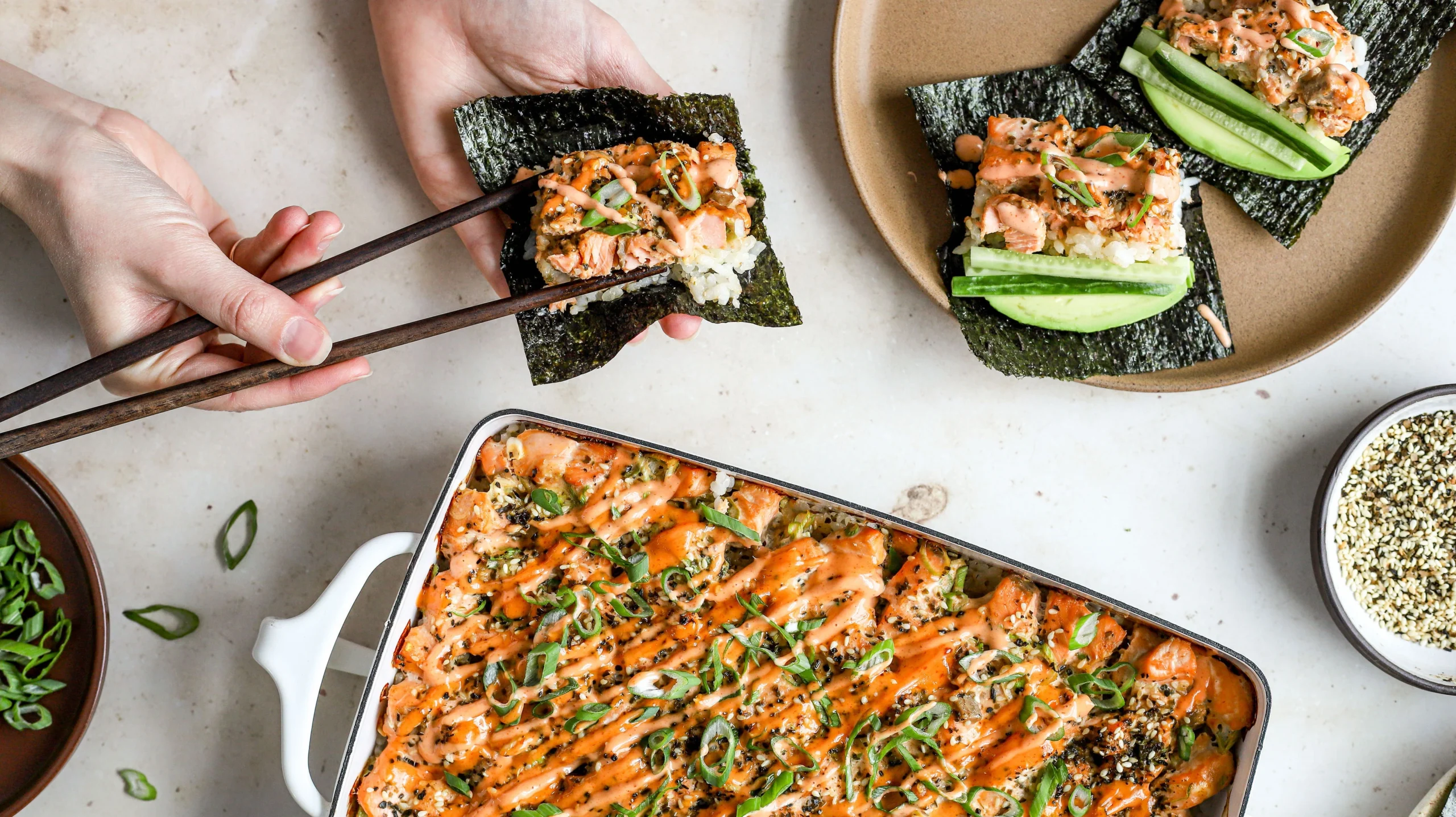
Sushi bake is a new and fun way to eat sushi without sushi rolling. Instead of sushi rolling, use sushi bake which is a big and warm layered casserole with crunchy crab topping and sushi rice that is baked and served with roasted seaweed sheets (or nori) to wrap it and can be served for parties.
There are a lot of sushi bake recipes and I’ll be walking you through all the steps to make the perfect sushi bake so that you avoid all the common mistakes that come with sushi baking. I will also teach you how to make the filling so that it won’t taste any mayo and learn the best recipes to use with sushi bake like spicy tuna, salmon, or shrimp. I’ll also be sharing how to make sushi bake so that you can use it for a meal prep and how to heat it up.
What is Sushi Bake?
Sushi Bake is a type of casserole that serves as a deconstructed sushi.
Typical ingredients include:
- Sushi Rice: Rice that has been seasoned with rice vinegar, sugar, and salt.
- Creamy Seafood Mixture: Imitation crab, salmon, or shrimp, as well as mayonnaise, and cream cheese.
- Furikake: Japanese seasoning blends with seaweed and sesame.
- Additional Toppings: Sriracha, eel sauce, green onions, sesame seeds, etc.
The dish is served warm. To eat, simply scoop out a piece of the mixture onto a seaweed wrap, add your choice of toppings, and enjoy a mini sushi hand roll.
Why People Love Sushi Bake
- Much easier than rolling sushi.
- Requires minimal effort.
- It is warm, and the creaminess makes it very comforting.
- It is a good meal for a larger crowd.
- It is very customizable.
Sushi Bake vs Traditional Sushi
Sushi bake may not be considered traditional sushi, but it does borrow the same flavor components.
- Seafood
- Rice seasoned with vinegar
- Creamy and mayonnaise
- Nori, sesame, and umami
The main difference sushi bake has over traditional sushi is warmth. Sushi bake is warm and scoopable. Sushi the traditional way is cool and has specific shapes and sizes.—
Ingredients You’ll Need
Here are the base ingredients. Easy changes to the recipe are found after the main recipe.
For the sushi rice layer
- Japanese short-grain rice (best for sticky texture)
- Rice vinegar (seasoning)
- Sugar + salt (to balance the vinegar)
Use short-grain rice because it is sticky. Long-grain rice won’t give the same sushi feeling.
For the creamy seafood layer
- Imitation crab (surimi), shredded (Most classic imitations use crab because it is cheaper)
- Kewpie mayonnaise (Japanese mayo) or regular mayo
- Cream cheese, softened
- Sriracha (optional for spicy)
- Soy sauce (small amount for depth)
- Green onions (for freshness)
For the topping and serving
- Furikake seasoning (very important for flavor)
- Nori sheets (roasted seaweed for scooping)
- Optional drizzle: sriracha mayo and/or eel sauce
- Optional toppings: cucumber, avocado, sesame seeds, tobiko, jalapenos
Equipment
No special sushi items are necessary.
Equipment Needed:
- A baking dish (8×8 inches or 9×9 inches) (or a baking dish that’s a similar size)
- A rice cooker or a pot with a lid
- Mixing bowls
- A spatula
- Measuring cups and spoons
- Plastic wrap or parchment (optional, for easy pressing)
Sushi Bake Recipe (Classic Crab)
Servings
For 6–8 people (as an appetizer or light meal)
For 4–5 people (as a heavier meal)
Time
- Prep: 20–25 minutes
- Bake: 15–20 minutes
- Rest: 5 minutes
Ingredients
Rice layer
- 2 cups uncooked Japanese short-grain rice
- 2 1/2 cups water (or follow your rice package/rice cooker guide)
- 1/4 cup rice vinegar
- 2 tbsp sugar
- 1 tsp salt
Creamy crab layer
- 16 oz (450 g) imitation crab, shredded or chopped
- 1/2 cup Kewpie mayo (or regular mayo)
- 4 oz cream cheese, softened
- 1–2 tbsp sriracha (optional)
- 1 tsp soy sauce (optional, for umami)
- 2 tbsp green onions, sliced (plus more for topping)
Topping
- 3–5 tbsp furikake (to taste)
- Extra sriracha mayo or eel sauce drizzle (optional)
For serving
- Nori sheets cut into squares
- Optional: sliced cucumber, sliced avocado, and sesame seeds
Step-by-Step Instructions
Step 1: Cooking the rice
Rinse the rice in a bowl and under cold water, swish rapidly for 3-5 times, and then drain until the water runs mostly clear. This removes extra starch and keeps the rice from getting gummy.
You can cook the rice in a rice cooker or on a stove. To cook it on the stove, add the water and rice to the pot and bring it to a gentle boil. Then, cover the pot, turn it down to low heat, and let it cook for 15 minutes. After 15 minutes, take it off the heat and let it rest for 10 minutes. Then, take a fork and fluff the rice.
Tip: Rinsing the rice helps a lot.
Step 2: Season the rice (Sushi-rice style)
To season the rice, grab a small bowl and mix rice vinegar, sugar, and salt. Then, put the bowl in a microwave for 15 – 20 seconds. The heat from the microwave will help the sugar and salt dissolve. Then pour the bowl’s contents on the rice. Mix it all up (but don’t mash the rice). Let it cool until it is warm and not steaming.
Texture goal: It should be sticky enough to form a layer.
Step 3: Prepare the creamy crab mixture.
In a bowl, add shredded imitation crab, mayonnaise, cream cheese, sriracha (optional), soy sauce (optional) and green onions. The mixture should be creamy and not watery.
If it feels too thick increase mayo by 1-2 tablespoons. If it feels too loose you might want to add a bit more cream cheese.
Step 4: Start sushi bake
Get the oven ready at 375°F (190°C).
You can lightly grease your baking dish or line the baking dish with parchment paper to make lifting it out a bit easier.
- Firmly pack down the seasoned rice at the bottom of the dish to make it even.
- Furikake goes on the rice in a thin layer.
- Spread the mixture of crab evenly on top.
- Furikake on top of the seafood layer.
Using a rice patting tip: stick your hand in some water (trust me its a good idea) or use plastic wrap to pat down the rice.
Step 5: Start baking
It needs to bake uncovered for at least 15-20 minutes to make sure it is hot and lightly bubbling at the sides.
To make sure the top is nice and brown; cook on broil for 1-2 minutes but make sure it doesn’t burn.
Step 6: Serve
Make sure to let the sushi bake cool for at least 5 minutes to let it scoop
Complete it with:
- use squares of nori to help with shopping
- optional slices of cucumber (fresh is crunchy)
- a nice balance of avocado (creamy)
- drizzle some sriracha mayo or eel sauce for spice
To eat: put a spoonful on a nori square, add your toppings and enjoy your meal!
What to Use for Rice in Sushi Bake?
Best options:
- Rice that is labeled as Sushi Rice or from as Short grain Sushi Rice
- Rice from Calrose (works well)
What to Avoid
- Rice that is labeled Jasmine or basmati (too fluffy)
- Brown rice (the texture is not classic)
- Rice in packets that is microwavable (too soft and mushy)
Long-grain rice will not hold together and be as sticky as other choices when scooped, but the flavor should be fine.
Optional Sauce for Drizzle (But Super Easy)
Sriracha mayo
Mix:
- 1/4 cup mayo
- 1-2 tbsp Sriracha
- optional 1 tsp Lemon Juice
Eel Sauce Alternative
If you don’t have eel sauce, you can:
- add soy sauce and sugar and mirin and let it simmer until it becomes thick
Use lightly; it is strong.
What Variation Will You Choose?
1) Salmon Sushi Bake (most favorite)
Get cooked Salmon instead of imitation crab
Here’s How:
- Have 1 to 1 1/4 lb of cooked salmon (canned, or baked, or pan-seared)
- Shred it and add into the mix of mayo and cream cheese and sriracha
Here’s an Add: Use a squeeze of lemon to salmon mix for brightness.
2) Shrimp Sushi Bake
Use cooked small shrimp.
- 1 lb cooked shrimp (or raw shrimp, sauté until pink)
- Chop and stir into the creamy sauce
For It’s really the best if: garlic powder and chopped green onion are added.
3) Spicy Tuna-Style Sushi Bake
Use canned tuna (eat tuna and drain).
- 2 cans tuna (5 oz each), drain
- Combine with mayo + sriracha + soy sauce (little)
MUST: Drain really well, otherwise the bake will be watery.
4) Sushi Bake Vegetarian
Use tofu and veggies.
Ideas for filling:
- Some diced mushrooms that have been sautéed
- Some corn
- Some shredded carrots
- Some diced cucumber (add fresh at the end)
- Some crumbled or cubed tofu (pan-seared for best texture)
Season with:
- Some mayo + cream cheese
- Some soy
- A tiny splash of sesame oil
- Some furikake (check if vegetarian—some have fish)
5) Dairy-Free Sushi Bake
Use:
- Dairy-free cream cheese
- Vegan mayo
Or make it creamy with:
- Some mashed avocado + a little lime + some vegan mayo (add after baking if you want a fresh taste)
Tips for the Best Sushi Bake
Kewpie if you can
Kewpie mayo tends to taste richer and slightly sweet compared to normal mayo. But it works with normal mayo too if that’s all you have
Don’t overbake
By overbaking, the seafood filling can dry out and the edges of the rice can toughen. Bake them just until they are all hot.
Add cream + fresh
Bake filling is really rich so it’s best to add some cucumber, scallions, or a few squeezes of lime so it doesn’t taste too heavy.
Furikake is everything
Furikake adds seaweed, sesame, and saltiness a bit extra. Don’t forget it!
Keep Nori separate
It’s best to add your Nori to the pizza so it doesn’t get all chewy.## Make-Ahead Instructions
You can prepare sushi to bake in parts to make it quick later.
Make Ahead (Best Method)
- You can cook and season the rice up to 1 day ahead.
- You can also mix the seafood topping a day ahead.
- Assemble and bake when ready.
Assemble Ahead
You can assemble the casserole, and refrigerate for a maximum of 12 hours.
This cold start will require an additional 3-5 minutes of bake time.
Storage and Reheating
Refrigerate
You can store leftovers in the refrigerator for up to 3 days.
Reheat
The best method for reheating is to use the oven:
- Set the oven to 325°F (165°C) and heat for 10-15 minutes.
Using the microwave will also work, but will soften the rice more. Instead of just heating it, heat in quick bursts and cover.
Freeze?
This is not recommended. The sushi rice and mayonnaise-based fillings will have a negative change in texture after being frozen and then thawed.
Serving Ideas
If you’re making this for a gathering, there are some fun ways to serve this dish!
- DIY nori station: Provide nori sheets, cut up cucumber, sliced avocado, jalapeño, sesame seeds, and some sauces for the guests to personalize their own nori rolls or cups!
- Mini cups: Serve the sushi and bake into small cups and top with green onions. Guests can eat this with a fork!
- Bento style plate: Along with the sushi bake, you can serve some eda-mame, miso soup, and a simple cucumber salad for a full meal!
Troubleshooting
My sushi bake is watery
What probably went wrong:
- The seafood (especially tuna) was not drained
- Too much sauce was used
- The frozen seafood released water while baking
Next time try to avoid this by:
- Draining canned seafood REALLY well before putting it in bake
- Using less mayo or cream cheese
- Patting seafood dry if you think it’s too watery
To fix this:
- Bake it for a few more minutes with the cover off so the water evaporates
- Adjust the flavor with more furikake and a cuke to balance out the sauce
The rice is dry or hard on the edges
What probably went wrong:
- The bake was overbaked
- The rice was old or you didn’t add enough water
- The dish you are using is too shallow
Next time try:
- Baking the dish only until it is heated through
- Using a slightly deeper dish
- Loosely covering the dish with foil if your oven runs hot
It tastes too heavy or too mayo
Fix:
- Add dried seaweed and chopped green onion, they may help
- These ingredients can be added: cucumber, avocado
- Squeeze lemon or lime juice
- Try Kewpie mayo, it helps the flavor be more balanced
The top burned
Fix:
- If you’re broiling, do it for just 1-2 minutes and watch it
- Put your food closer to the bottom
- Use foil to cover, to avoid burning
Important Food Safety:
- If you use raw shrimp, for example, cook it before mixing.
- Letting the sushi bake sit at room temp for more than 2 hours is a big no.
- The window of time is short for refrigeration. Do it fast.
Sushi Bake Recipe Questions
Is it possible to use normal vinegar in place of the rice vinegar?
If you have to use it, use white vinegar, but reduce it (because you want it to be less acidic) and balance it with a little extra sugar. Just know it will not taste the same.
Is it okay to use brown sugar in place of white sugar?
Sure, use the same amount. It will just have a little bit of a caramel flavor.
What if I can’t find furikake?
You can try something like:
- toasted sesame seeds
- crushed nori (a.k.a. seaweed snack)
- little salt and sugar
This won’t be the same, but it still tastes good.
Do you serve sushi baked hot or cold?
Usually warm. Some people like it at room temp, but warm is best for that creamy texture.
What nori is best to use?
Roasted nori sheets (the kind for sushi). Cut them into smaller squares for easier scooping.
Can I make it spicy?
Sure, add:
- more sriracha
- chopped jalapeños
- chili flakes
- spicy furikake (if you find it)
Explore More
For more valuable resources on cooking delicious seafood recipes, guides, and tips, visit our website to create more excellent meals at home.