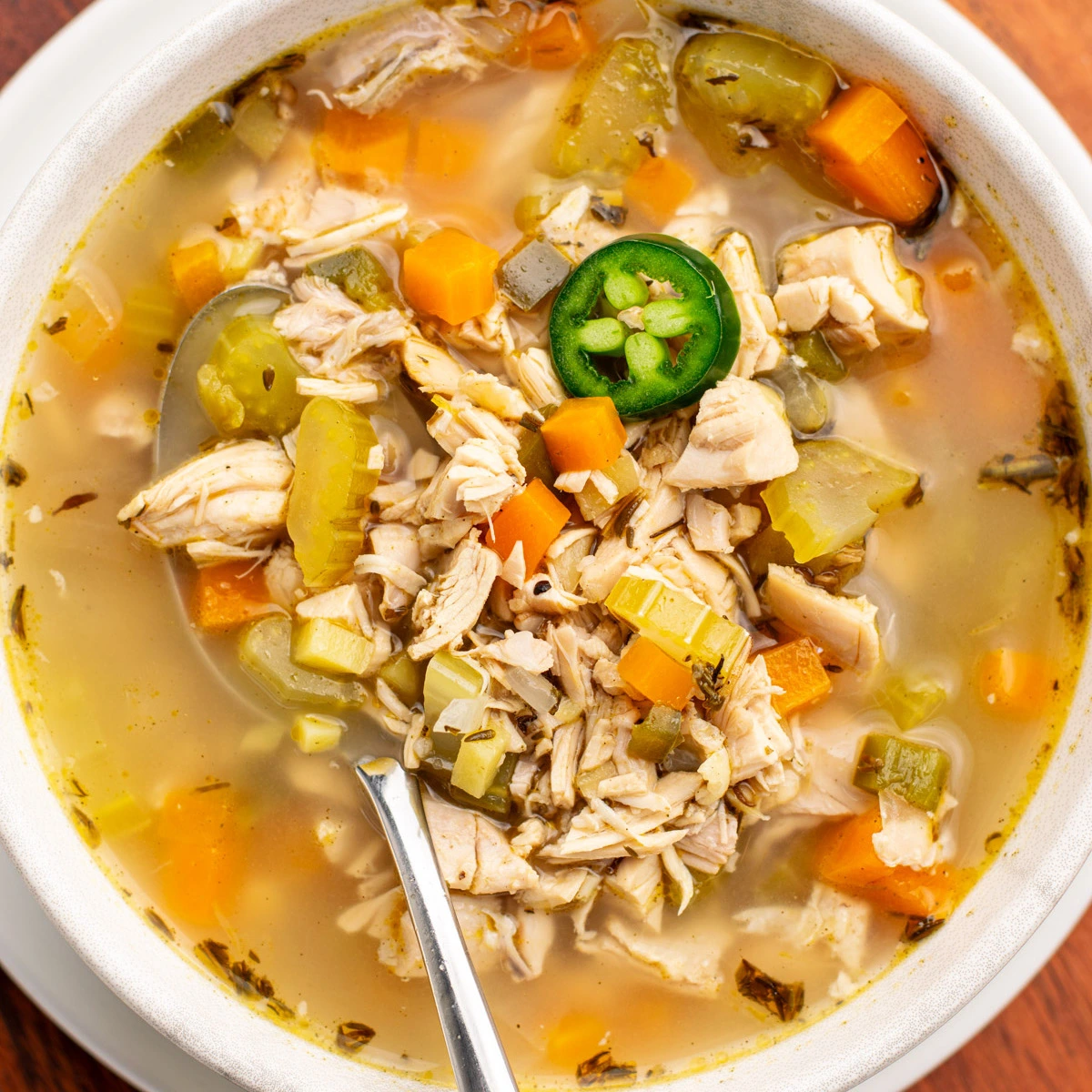
It’s easy to learn how to make chicken broth! Recipes can sound fancy, but this one is super simple. It uses common ingredients, and with a gentle simmer, your broth can be the gold standard!
Unlike broth found at the store, home made broth is ridged in a clean and rich flavor. Chicken broth can enhance a variety of dishes including soups, sauces, gravies, and rice. Make chicken broth when you want to make your family a comforting meal, when you want to prepare meals for the week, or when you want to use up some of your leftover chicken bones to make chicken broth. No worries! I will show you step by step how to make chicken broth and I will show you how to adjust the recipe to use your stovetop, slow cooker, or Instant Pot as well.
What Is Chicken Broth?
Broth is made by simmering chicken with some bones, herbs, and other liquids. It is generally a lighter flavor than stock, but stock is also very flavorful.
Chicken broth vs chicken stock
People use the terms “chicken broth” and “chicken stock” interchangeably, but there are some differences.
- Broth usually is made with a whole chicken, uses meat, and is simmered for a shorter amount of time. Typically, people describe broth as a lighter and more sippable flavor.
- Stock uses more bones, is simmered for a longer period of time, and will become slightly gel-like when it is chilled due to the presence of collagen.2. Can be Whole Chicken or Just Bones. Simmer time determines which.
Why Broth?
Better flavor and more control.
You can control most factors:
- Even the level of salt can be controlled. When it comes to store bought broths, they can be extremely salty.
- You can control the quality of the ingredients.
- Can control which aromatics and herbs go in.
- Leftovers: It’s the best way to use a leftover roast chicken carcass, wing tips, backs, necks, and freezer saved bones.
- It’s cheap: A single chicken carcass and a couple vegetables can make multiple quarts of broth for way less than you’d pay for a couple cartons at the store.
3 Best Rules for a Good Broth
- Never boil it. Just simmer.
The more the broth is boiled, the more cloudy it will be and the more pot will be present in the broth.
- Use cold water.
It will keep the broth clear.
- Don’t salt
Over salting the broth could ruin all of your other meals.
Chicken Broth. (What You Need and Why)
Yes, this can be super simple. These, however, are the usuals.
Fowl (pick one)
- 1 whole chicken (3-4 lb): Makes rich broths and gives you cooked meat that can be used in other soup/ meal prep jobs.
- 2-3 lb mixed chicken bones/parts: backs, necks, wings, carcass—awesome for a super profound flavor.
Tip: Wings add body due to collagen-rich joints and skin.
Classic Aromatic Trio
- Onion (adds death and sweetness)
- Carrot (adds sweet and color)
- Celery (adds that umami smell)
Seasoning
- Bay leaves
- Pepper
- Parsley (Good, but optional)
- Thyme (optional)
- Garlic (optional)
Salt (optional)
A lot of cooks leave broth unsalted for an all-purpose base. If you want it to be a not-too-bad sipping broth, a small amount of salt is a requirement that you can change later.
Supplies Needed
- A big stockpot (minimum 8-12 quarts)
- A fine mesh strainer
- A big bowl (or another pot) for draining
- Tongs and a ladle
- Optional: Cheesecloth for broth that is extra clear
- For storage, containers or jars
Old-Fashioned Chicken Broth Recipe (Best Overall Method)
Yield
Approximately 3-4 quarts (12-16 cups) depending on size of pot and time spent simmering.
Time
- 10 minutes to prep
- 2.5-4 hours to simmer
- 30-60 minutes to strain and cool.
The Recipe
- a whole chicken (3-4 lb) or 2-3 lb chicken bones/carcass
- 1 large onion, quartered (keeping the skin is fine for color)
- 2 carrots, cut into large pieces
- 2 stalks of celery, cut into large pieces
- 2 bay leaves
- 1 whole peppercorns
- 6-8 sprigs thyme or 1 teaspoon dried (optional)
- 1 small bunch of parsley stems (optional)
- 4 cloves of garlic, smashed (optional)
- Cold water, (10-12 cups ) enough to cover by approximately 1 inch)
- Salt (optional; start with 1 teaspoon if using)
Instructions (Stovetop)
Step 1: Put everything into the pot
- Put the chicken (or bones) in the pot.
- Add onions, carrots, celery, bay leaves, peppercorns, (and other optional. herbs, garlic, etc)
- Add cold water until everything is covered by about one inch. Don’t go over one inch like a full pot of broth, because of foaming (when you first make broth it foams and you have to skim it).
STEP 2: Gentle simmer
Place on medium heat. When you notice a very small bubble at the edge of the pot, this is your indicator to put it on low. This can take up to 30min to an hour depending on your stove and pot size.
STEP 3: Skim off foam (first 20-30 min)
In these first 20-30 minutes, you may see gray foam. Skim off the foam because it will taste cleaner and broth will look clearer. This is more effective when you are using a whole raw chicken, or a lot of raw bones.
STEP 4: Reduce heat and simmer gently
Lower the heat to keep a gentle simmer broth (only a couple bubbles). Place the lid on the pot, and keep it slightly cracked. This is how long you want to simmer:
- 2.5-3 hours. This is good to drink, and to use for sauces and rice. (Light broth).
- 3-4 hours. This is the best soup base, (Rich broth).
It can be hard to avoid having a strong boil. If this is your goal, a gentle simmer will provide the best texture and clarity, but a broth that is cloudy will still taste good broth. Also, avoid a strong boil. ( soup base)
Closing instructions.
Step 5: Take out chicken and strain
Use tongs to remove chicken and bones, and vegetables, then pour broth into a mesh strainer over a big bowl or pot.
To get even more clear broth, strain with cheesecloth.
Step 6: Cool broth quickly
To make sure the broth is safe, cool it quickly. Here are some safe quick cooling methods:
- Put the pot or bowl into a sink full of ice and water. Stir the broth often.
- Split it into more containers, so the broth cools faster.
Make sure to refrigerate the broth within 2 hours!
Step 7: Remove fat (this step is optional)
Once the broth is chilled, the fat in the broth will rise and get solid. You have the option to:
- take it all off for a cleaner broth, or
- keep some fat for flavor (especially if you’re using the broth for soup)
What if You Used a Whole Chicken: What to Do with the Meat
If you simmered a whole chicken, you now have some cooked meat. The meat will be pretty tender, but pretty plain because all of the flavor went into the broth.
Here’s some ideas on what to make with the leftover chicken in your broth from the recipes above:
- chicken noodle soup
- chicken salad (add mayo, salt, and pepper,
- tacos or quesadillas (add more seasoning)
- fried rice
- pasta dishes
Tip: If you want the chicken to stay firmer for slicing, pull the chicken out around 60-90 minutes, then return the chicken bones back to the pot to keep simmering.
Slow Cooker Chicken Broth Recipe (Easiest Hands-Off)
Why this method?
- you don’t need to keep an eye on the pot
- you can leave it while you sleep
- it’s less likely to boil over
Ingredients
same as stovetop
Directions
- Put everything in the pot
- Set it on LOW for 8-10 hours (best) or on HIGH for 4-5 hours
- Sort and cool everything as described above
Tip: Not all slow cookers work the same. If the broth looks cloudy from boiling, change it back to LOW.
Instant Pot Chicken Broth Recipe (Fastest)
Why this method
- instead of hours, you’ll get the same broth in minutes
- deep flavor in less time
- use this method if you meal prep
Ingredients
same as stovetop, but less water so it stays below the max fill line.
Instructions
- Place the chicken/bones, aromatics, and water (do not exceed the max fill line) in the pot.
- Set the pot to pressure cook on High and:
- 30 minutes for a whole chicken (lighter broth)
- 45 minutes for a bones/carcass (richer broth)
- Once done, wait Natural Release for 20 minutes and then do a quick release for the remaining pressure.
- After the broth has been strained, cool it.
Tip: The Instant Pot broth might not be as clear as other methods since the cloudiness from the movement and pressure, but it tastes good.
Roasted Chicken Broth (Deeper Flavor Option)
If you’d like to have a more “roasted” and dark broth, here’s how to do it:
How to do it
- Roast the bones/carcass and/or wings at 425°F (220°C) for 30–45 minutes or until they are browned.
- Add the roasted bones to the pot with the aromatics and water.
- Simmer as you would usually do.
This technique works wonderfully for: – ramen-style soups – bases for gravies – stews
Take Steps for a Clearer Broth
For most home cooking, broth clarity doesn’t really matter, but for a clear, golden broth, do these things:
- Starting with cold water is best
- Be slow with heating
- Keep a subtle simmer
- Skimming the foam should be done early
- Careful straining only
- Stir little during the simmer
As an Aside: Egg Whites for Additional Work
This technique is considered old school (like consommé). It is not advisable, but in the end, will create broth that is very clear. If you want instructions, I will provide them.
Let’s Get Practical With Using Chicken Broth
Your homemade broth is great for so many things!
Soups
- Chicken noodle
- Tortilla
- Lemon Chicken
- Chicken Veggie (makes broth less watery if you aren’t using a lot of chicken)
Grains and Starches
- Cook your rice, couscous, and quinoa in broth for added flavor
- Add broth to mashed potatoes in place of milk for a lighter flavor
Sauces and Gravies
- Use broth in pan sauces for chicken and pork
- Shorten your gravy by using broth instead of drippings
Braises
- Use broth for a richer flavor when you are simmering chicken thighs, pot roast, or beans
Drinking Broth
- Heat up your broth, add salt to your taste, and if you want a kick, add a squeeze of lemon (super yummy!)
Storing & Food Safety
Refrigerating
- Storing broth in airtight containers will keep it fresh for around 3-4 days
Freezing
- Broth freezes great for up to 3 months. It’ll actually taste better the longer it freezes!
- You should freeze your broth in
- 1-2 cup containers for actually cooking with it
- Ice cube trays for small amounts of broth to use when cooking sauces or when deglazing your pan
And please, don’t leave your broth sitting out to cool for long periods of time. Use the ice bath method to cool your broth and get it into the refrigerator quickly.
Troubleshooting (Common problems & how to fix them)
My broth is bland
Possible problems:
- Insufficient broth or bones
- Excess water
- Simmered for too little time
- No aromatics
Fixes:
- Broth: Simmer longer to reduce
- Seasoning: Add pinch of salt (Salt ‘unlocks’ flavors)
- Next time: Use more bones (especially wings/backs)
My broth is too salty
Fixes:
- Better to dilute with water or unsalted broth
- Add unsalted cooked potatoes to absorb some salt
- Next time, avoid salting until the end
My broth is cloudy
Cloudy broth is still good. Possible causes:
- Too much boiling
- Too much stirring
- Pressure cooking
Fixes:
- Next time, try to be more gentle when simmering & skim the foam
My broth turned to gel in the fridge
That’s a good sign. It means collagen extracted from bones. It will melt back into liquid when heated.
There’s too much fat
Skim some fat off once chilled. Keep a little if you like flavor.
For the Curious
Do I get to make broth with my rotisserie chicken carcass?
Of course. And even more, because it has already been roasted and seasoned to make it even more flavorful! Just make sure when you finish the broth to keep the salt low before you taste.
Is it ok to reuse the bones for broth again?
Can do but it will be much weaker. If you do, you should add new ingredients and let it simmer longer. You may also have to reduce it less in order to keep the broth’s flavor concentrated.
Do I have to use vinegar to get the minerals out of the bones?
Not at all! Some recipes do require a splash of vinegar but it’s totally up to you. You won’t need it to have great broth. If you do use it, just add 1 to 2 teaspoons and keep it subtle.
Is it safe to simmer broth all day?
It is very safe. But just for chicken broth, it is best to do it for 3 to 4 hours because after that you may start to overcook the rest of the ingredients. If for some reason you do start cooking it longer, you should remove the added vegetables after 2 to 3 hours.
What’s the best ratio?
From experience, this works:
- 1 whole chicken (or 2-3 lb bones)
- 1 onion, 2 carrots, 2 celery
- add water until it covers the whole thing by 1 inch
Conclusion
A good chicken broth recipe is about the right amount of chicken to broth ratio, taking care to cool it down, then storing it the right way afterwards. Once you’ve done it a few times, chicken broth becomes one of the simplest meals to prepare, especially because it transforms bland ingredients into delicious soups, sauces, and meals, with amazing flavor, putting any store-bought broth to shame.
Explore More
For more scrumptious recipes and cooking tips, check out our website for more meals to make at home!