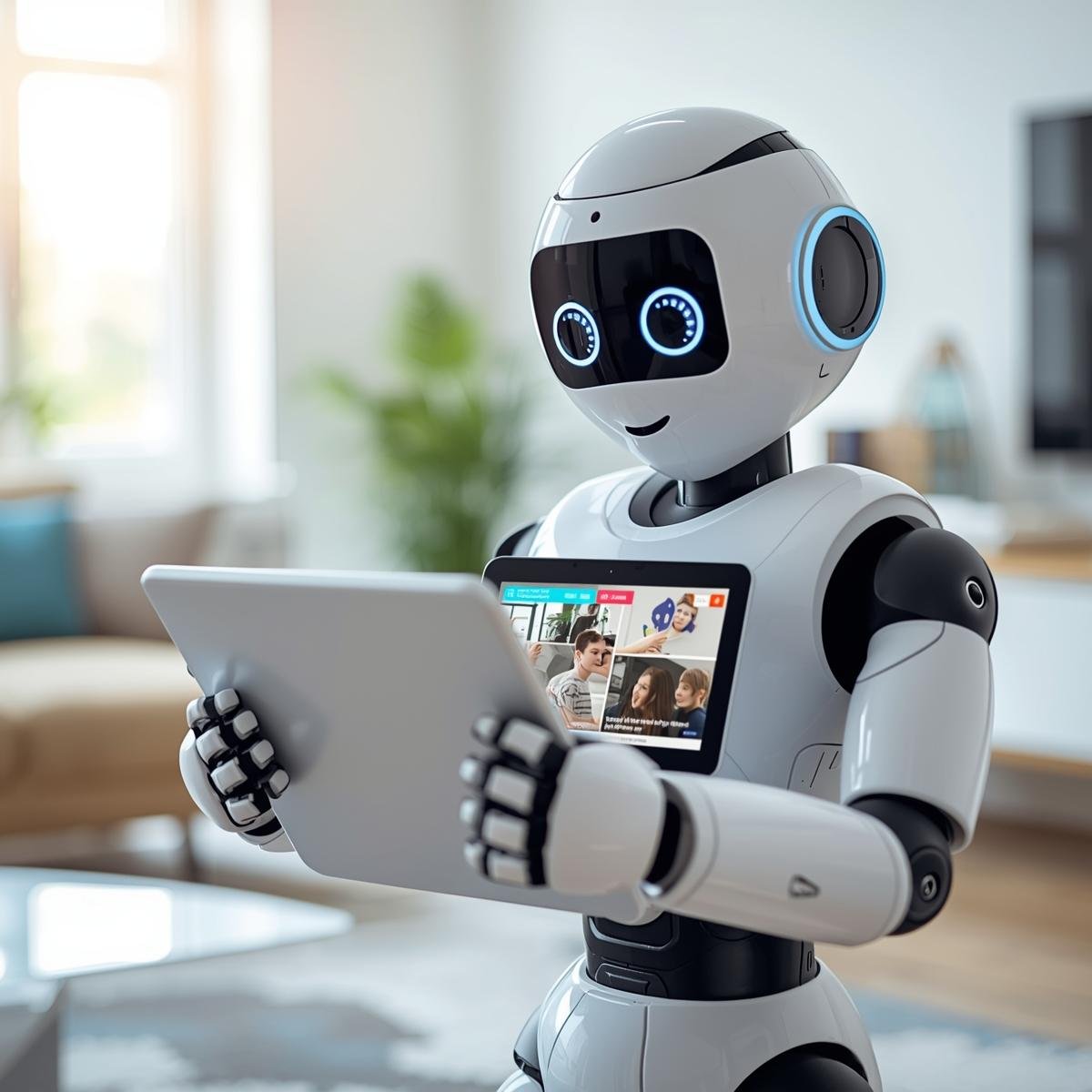
Humanoid Robotics News: The world of technology continues to advance each year with the introduction of new robots that imitate human form, movement, and even thought. These new robots are already impacting people’s daily activities at work and school. This article provides an in-depth look at humanoid robots news, explaining what they are, how they work, the various types, and the latest developments in the field.
What are humanoid robots?
The behavior and appearance of a humanoid robot are both closely human-like. Most humanoid robots have a head, torso, and limbs. Movement can be bipedal (walking on two legs) or wheeled.
Humanoid robots use computer systems, multiple sensors, and customized engineering motors. Specialized robotic engineering gives them various forms of “sight, sound, and touch.” The robot’s computerized “brain” decides which actions to take.
The advancement of humanoid robots
The creation of humanoid robots has occurred over many centuries.
The Ancient World: Ancient Greece had the earliest known examples of miniature, moving mechanical creations.
- 1700s: European clockmakers created dolls that could write and compose music.
- 1900s: Engineers in the USA and Japan built the first modern humanoid robots.
- 2000s: Robots like Atlas, ASIMO, and Sophia gained fame for their advanced technology and human-like behavior.
What Keeps Humanoid Robots Functional?
To accomplish certain functions, robots can employ a mix of purpose-built hardware and software solutions.
- Sensors
To understand their environment, robots rely on sensors. These sensors enable robots to detect and process light, sound, and touch, and to measure the distance to objects. Robots may use sound-detecting microphones as \”ears\” and light-detecting cameras as \”eyes.\”
- Motors and Actuators
Motors supply power for a robot’s head and limb movements. Actuators control these movements and make them accurate.
- Artificial Intelligence
Robots are equipped with an AI brain. They can understand and recognize human faces, conduct conversations, and acquire new skills.
- Power Supply
The majority of robots have batteries as they need to be powered to operate. Higher-level humanoid robots even possess the means to recharge their batteries on their own.
- Control Systems
This is the system that combines and coordinates all the functions. It tells the robot what tasks to do and how to do them.
Classifications of Humanoid Robots
There are two main subdivisions of humanoid robots:
- Androids
Androids resemble humans the most. These robots have realistic skin, eyes, and hair. They appear in movies and sometimes in museums and research facilities.
- Bipedal Robots
Bipedal robots walk like humans. These robots work in jobs that require movement, such as emergency rescues and distribution centers.
Examples of Some of the Most Famous Humanoid Robots
- ASIMO by Honda in Japan
ASIMO is a highly recognized humanoid robot capable of walking, running, climbing stairs, and even serving drinks.
- Atlas by Boston Dynamics in the USA
Atlas is a powerful humanoid robot capable of jumping, performing backflips, and lifting heavy objects, and it is commonly used in research and rescue missions.
- Sophia by Hanson Robotics in Hong Kong
Sophia is a robot that can have conversations. Sophia was even given citizenship by the country of Saudi Arabia.
- Optimus (Tesla, USA)
Tesla’s Optimus bot can perform a variety of simple activities like picking up and moving bins, cleaning, and helping with other tasks in a factory.
- Ameca (Engineered Arts, UK)
One of the best at voice and facial interaction is Ameca. Ameca tells jokes and can smile and blink.
Humanoid Robots Applications
Today, many industries are incorporating the use of humanoid robots.
- Education
Robots can help teach students science, math, and tech. They are able to teach coding and robotics too.
- Healthcare
Some robots assist healthcare workers. They move patients, give medication reminders, and help with surgical procedures.
- Factories and Industries
Humanoid robots are being used in assembly line factories. They help with lifting and other operational tasks.
- Space Exploration
Other space and planetary exploration is being done with humanoid robots. NASA and other space organizations are using them to explore the unknown.
- Customer Service
Some hotels and airports have robots in the lobby to welcome customers. They serve to answer questions and give directions.
- Entertainment
Used to act and perform, humanoid robots sing and dance in movies and shows. They are also used in amusement parks.
Regarding Humanoid robotics news (2026 Updates)
2026 shows how fast technology is advancing.
- Optimus 2.0 by Tesla
Tesla’s latest humanoid robot, Optimus 2.0, performs more tasks than its predecessor. It walks faster, uses tools, folds clothes, and assists in Tesla’s factories.
- The Upgrade of Boston Dynamics Atlas
Boston Dynamics upgraded Atlas. AI improvements and better balance enable it to perform more tasks than before. The robot can now stack and pick up boxes.
- AI Chat System of Ameca
With the use of the latest technology in AI, Ameca can now engage in realistic conversations.
Ameca can respond to inquiries, tell stories, and even detect voice emotions.
- Usage of Robots in Hospitals
In Japan and South Korea, hospitals have started to use humanoid robots to assist elderly patients. These robots can freely converse, play games, and provide reminders about medicine.
- Use of Humanoid Robots in Educational Institutions
In the United States and Europe, several educational institutions have started to use humanoid robots to aid in teaching children. These robots can teach and also play games to assist children in learning math and languages.
Advantages of Humanoid Robots
- Help in risk jobs:- Working in mining and disaster zones is a huge risk for people, but can be done by robots.
- work around the clock:- Unlike humans, robots can work twenty-four hours a day and do not need to take breaks.
- less errors:- Robots, unlike humans, make a lot fewer mistakes.
- Learning – Robots can be taught to learn new things using artificial intelligence.
- Support for the elderly and disabled – Elderly and disabled individuals may need help with walking, eating, and cleaning, and robots can assist with these activities.
Challenges of Humanoid Robotics
The most advanced humanoid robots have numerous shortcomings.
- High Costs: The construction and maintenance of the robots may be very costly.
- Shorter Battery Life: More advanced batteries need to be used for an extended time.
- Difficult Programming: Training a young child to walk and talk is simpler than programming most humanoid robots for similar tasks.
- Concerns: People worry about robots doing jobs that a human could do.
- Safety Concerns: People need to feel safe when a robot is in operation.
Future Possibilities of Humanoid Robotics
The positive outlook on omnidirectional humanoid robotics continues to improve. Engineers continue refining robotics to perform useful tasks with humans.
- Advanced Cognitive AI: Sociocultural knowledge acquisition enables robots to analyze and engage in dialogue, incorporating context, paradigms, and schema.
- Improved bipedal locomotion: Beyond simply walking, humanoid robots will be able to do a much wider variety of activities.
- Decreased prices: Affordability will increase the accessibility of the robots to the average consumer.
- Remote human-robot collaboration: Advanced collaborative systems incorporating human and machine workers alongside humanoid robots will be possible.
- Extraterrestrial robotics: Humanoid robots will perform helping activities and exploration outside of Earth.
The next decade of robotics promises to be informative with the rapidly growing field of robotics.
The World’s Changing Hands
The work of humanoid robots is lessening the burden of work tasks and providing emergency aid, and companionship in times of loneliness. They are assisting people in changing how they live and work. In the future, they may assist with advanced tasks like meal preparation, housekeeping, and teaching children. Users of collabsworld.com have the opportunity to learn about the latest technological advances in the fields of robotics, artificial intelligence, and other new technologies. They capture the most recently developed inventions, smart technologies, and creative new designs.
The Study of Humanoid Robots
All ages are taught beginner classes in robotics.
- Reading: A great entry point to start on. There are many basic, introductory books on the topic of AI and robotics.
- Videos: A wide variety of educational videos on the topic of robotics can be found online.
- Robotics clubs: Inventor clubs for children and teenagers are common in many schools and community centers.
- Websites: On collabsworld.com, you can find articles about basic technology and robotics.
- Building: Beginners can get a start on programming their own miniature robot kits.
Interesting Information About Humanoid Robots
The word “robot” comes from a Czech word meaning “serf” or “work”.
Can remember, recognize, and recall faces.
Japan is the most robot-populated country in the world.
Can produce art and even write books.
Humanoid Robots and Artificial Intelligence.
Intelligent humanoid robots utilize AI to think and make decisions. AI helps robots decide whether to navigate around obstacles and allows them to interact with and understand people. Humanoid robots, like chatbots and virtual assistants, employ the same AI technologies. In the future, humanoid robots may very well become personal assistant robots who understand and respond to the emotional states of the people around them.
Humanoid Robots in Daily Life
Most of our daily requirements will most likely be met by humanoid robots.
- At Home: robots will take care of chores and may even do the cooking.
- At Work: There will probably be robots that handle repetitive tasks in an office, leaving humans to work on the creative and higher-level tasks.
- In Public Places: In the future, robots will be able to assist and direct people in airports, shopping malls, and museums.
- In Hospitals: There will probably be robots that deliver medicine and monitor people’s health.
How Humanoid Robots Can Help the World
The positive impact of humanoid robots includes cleaning the oceans, planting trees, and monitoring pollution. However, the fabrication of humanoid robots can impact the environment negatively, which is why sustainable designs are encouraged.
The Role of Companies in Humanoid Robotics
Pioneering Companies in Humanoid Robotics include Honda and Boston Dynamics, Tesla, who are creating Optimus for industrial and home use, Hanson Robotics, the maker of conversational Sophia the robot, and Engineered Arts, creator of the ultra-realistic Ameca. These companies possess many of the most advanced concepts in Robotics.
The Role of Humanoid Robots in Education
Humanoid robots are becoming more frequent in classrooms as teachers and assistants. They explain lessons, answer questions, and make learning fun. They are social and engaging, which are motivating factors for students.
In addition, some schools use robots to teach coding and problem-solving, equipping students with the skills needed for future careers in the tech field.
Conclusion
Inventions like Exciting Humanoid Robotics are showing us new, modern technology, aka, humanoid robots. They’re technologically advanced enough to aid in medical facilities or even in battle. These technologies are changing our world. As technology continues to develop, the Humanoid Robotics News we’ll have in the future will complete tasks for us and make our lives easier.