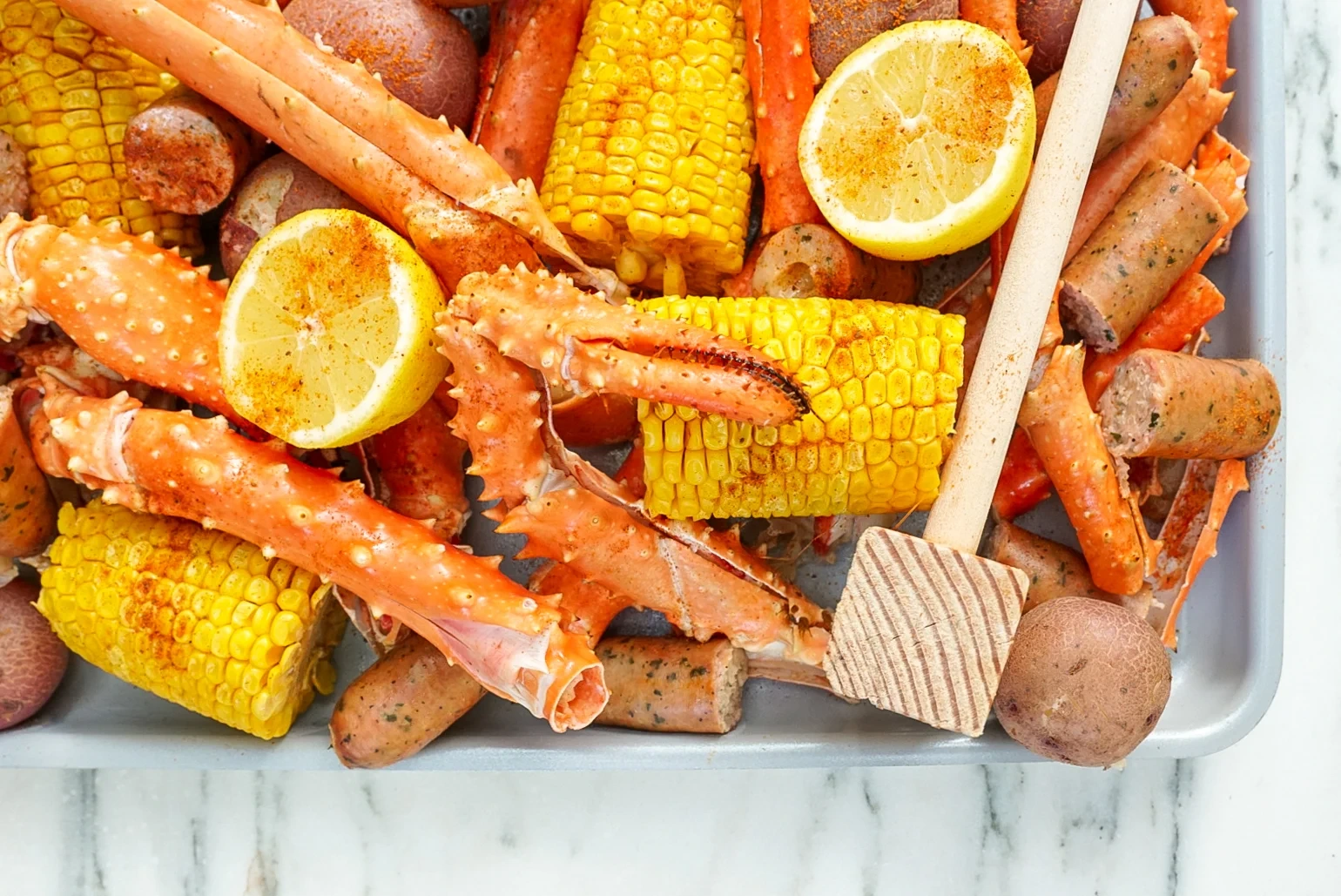
One of the most fun dishes to make at home is a seafood boil. This dish combines fresh shellfish, cooked vegetables, and a variety of seasonings to create a one-pot meal. The seafood boil is a feast that creates wonderful aromas around the house, as well as lasting memories at the dinner table. Seafood boils are great for backyard parties and family dinners and are sure to please. This guide will provide you with all the information needed for a great seafood boil at home.
What Is a Seafood Boil?
A seafood boil is a classic method of cooking that is representative of the Southern United States. It involves boiling shellfish, vegetables, and sometimes sausage, in a heavily seasoned broth. The combination of the broth with all of the ingredients creates a meal that is well-balanced in flavor and very complex, yet simple to make.
What makes a seafood boil special is the communal aspect of the meal. Family and friends gather around and feast, using their hands to peel shrimp and crack crab legs. In the traditional style of a seafood boil, the cooked contents are drained and dumped directly onto the table covered in newspaper. No plates or utensils are required, just good food and great memories.
Variations
As with anything, different parts of the coast have created their own seafood boil variations.
Louisiana Crawfish Boil: Rather than shrimp, this boil uses crawfish, boasting lots of spices and Cajun seasoning. They also include corn, potatoes, and even mushrooms.
Low Country Boil: In South Carolina and Georgia, this version uses shrimp and smoked sausage with corn and potatoes. The spices are mild in this one.
Maryland Crab Boil: In this boil, the blue crabs meat is the star of the show. The crabs are boiled with corn and potatoes and seasoned with a trap called old bay.
New England Clambake: In the northeast region, this tradition uses clams, lobsters, corn, and potatoes to cook together to have a traditional coast meal.
Key Components
Seafood
The quality and freshness of seafood is essential.
Shrimp: Jumbo or large shrimp with shells on are perfect because the shells help protect the meat and give it flavor. Plan on half a pound of shrimp per person.
Crab: Dungeness crab, snow crab, and king crab legs work great. Most crab legs are sold pre-cooked and frozen, so they just need to be warmed and will be good to eat.
Crawfish: For Louisiana-style boils crawfish are a must. For the best taste and texture use live crawfish.
Lobster: Adding lobster tails will add some sweetness and class to the boil, although they are pricey, they elevate the dish significantly.
Clams and Mussels: These can cook quickly so it’s a good idea to use some. Make sure to clean any gunk on the shells and discard any that are open and do not close when tapped.
Vegetables and Starches
Corn on the Cob: Fresh corn is best, just cut the ears of corn into halves or thirds so they are easier to eat.
Potatoes: For this, use small red potatoes or baby Yukon gold potatoes. These will stay whole during boiling and not fall apart.
Onions: For this use either whole or halved onions. This will add sweetness and richness to the cooking liquid.
Garlic: Use whole heads of garlic cut crosswise in half. The garlic will be soft and sweet when it’s cooked.
Lemons: Use halved lemons to add some brightness to the broth, and they can be squeezed on the final product.
Additions of Meat
Andouille Sausage: This type of sausage is suitable for inclusion for the purpose of Cajun-style boiling, as it is spicy and smoked. Sausage should be cut into two inch portions.
Kielbasa: This type is an alternative sausage which is smoked but is not too spicy and provides no real invitation to the boil.
Spices
Old Bay Seasoning: This variety of spice is a favourite when one is considering a Maryland-style boil. This is because it combines several spices, including celery salt, paprika, as well as several other spices.
Cajun Seasoning: This particular variety is one which provides a much stronger heat in comparison to other varieties. This is what a pure Louisiana taste is.
Zatarain’s Crab Boil: This seasoning is one of the more common, store-bought varieties of spice that is used for boiling shrimp.
Homemade Blend: Make a mixture of spices that include enough quantity of paprika and cayenne pepper, as well as garlic powder, onion powder, black pepper, thyme, oregano, and bay leaves, and use that.
Equipment Needed
Cooking Equipment
Large Stock Pot: For a gathering of six to eight people, a pot size of 20- quart is the minimum that is required. 40 to 60-quart pots are better for bigger gatherings.
Propane Burner: Outdoor propane burners are much quicker for boiling large pots as well as keeping the mess outside. Bayou Classic and King Kooker are common brands.
Strainer Basket: an insert basket will be better for removing the shrimp and other food.
Long-Handled Spoon: This will help when cooking to stir the soup so they do not get burned.
Serving Equipment
Newspaper or Butcher Paper: This will cover the table that will be used to dump the seafood.
Small Bowls: For used shells and melted butter dipping sauce.
Seafood Picks and Crackers: For removing and cracking crab leg meat.
Wet Wipes and Paper Towels: Seafood boils are messy. Bring a lot.
Seafood Boil Complete Recipe
Ingredients
For the Boil:
- 5 pounds shrimp, large
- 3 pounds crab legs, snow
- 2 pounds sausage, andouille, cut into 2-inch portions
- 3 pounds potatoes, red, small
- 6 corn cut in half
- 2 onions, large, halved
- 2 heads garlic, halved crosswise
- 4 lemons (halved)
- 1 cup seafood boil seasoning
- 4 leaves, bay
- 2 tablespoons (tbsp) salt
- 1 tbsp black pepper
- 1 tbsp cayenne pepper
- 5 gallons water
Garlic Butter Sauce:
- 1 cup butter, unsalted
- 8 garlic cloves, minced
- 2 tbsp lemon juice, fresh
- 1 seasoning seafood
- 2 tbsp parsley, fresh, chopped
- Hot sauce to taste
Stepwise Instructions
Step 1: Preparing the Ingredients
Before you start the cooking, you must start it to run and so on. With proper shrimps washing, and clear Leg down crab if it is frozen. Cut the sausage in pieces of two inches. The potatoes are dirt. The corn and cut the husk in each half. Cut the garlic and onions in half, lemons.
Most of the preparation should be done prior to the cooking. Things will start to happen quickly once cooking begins.
Part Two – Seasoning the Water
Using a filler and fill the large pot with about 5 gallons of water. Place the pot on the burner with the heat set to high.
Once the water is on the heat, add your seafood seasoning, salt, black pepper, cayenne, two bay leaves, two halved onions, two halved garlic bulbs, and two halved lemons. Bring your pot to a rolling boil and allow it to boil for 10 minutes so the water will be infused with your seasonings.
Taste the water. If the water is bland then add more seasonings.
Part Three – Adding the Potatoes
Since the cooking time for the potatoes will be the longest, add them to the water first. While the water should be at a boil when the potatoes are added, it is vital to ensure this happens.
After 10 minutes, the water should have begun to boil again and the potatoes should have softened. You do not want the water to be at the boiling point again.
Part Four – Adding the Sausage and Corn
Once the 10 minutes has passed, add in the sausage and corn. Use your spoon to gently stir the water to ensure everything is uniformly distributed, then, once again, boil the mixture for 8 to 10 minutes. If stabbed with a fork, the corn should become tender.
Step 5: Include the Crab Legs
Add the crab legs into the pot. Submerge them completely into the broth. Frozen crab legs that have already been cooked should only be in the pot for roughly 5 minutes. Fresh crab legs should be in the pot for roughly 6 to 8 minutes. You’ll know they’re done when the shell turns a bright red-orange color.
Step 6: Include the Shrimp
Add the shrimp to the pot and gently stir them in so they’re submerged. Shrimp cooks super quickly so they should only be in the pot for 2 to 4 minutes. When they’re done they should have turned from gray to a pink color and should be in a loose C position.
If they’re tighter in an O position, they are way overcooked.
Step 7: Turn Off the Cooking Device and Let Them Rest
Turn off the cooking device as soon as the shrimp become ready. Let everything rest for an additional 5 to 10 minutes in the hot broth. This is done to make sure the flavors combine well without cooking the ingredients any further.
Step 8: Prepare the Garlic Butter Sauce
While the seafood is resting, prepare the butter sauce. In a separate small saucepan, butter is melted. Once butter is melted, the sauce is combined with the minced garlic. The sauce is then cooled for 1-2 minutes to let the garlic become fragrant. The butter sauce is then mixed with lemon juice, seafood seasoning, and parsley. If needed, hot sauce is added. The sauce is distributed to dipping bowls.
Step 9: Drain and Serve
Take a large newspaper, butcher paper, and place it over a large surface area. It is essential that the straining, for example, the pot is uncapped so that the excess liquid can be released. The strainer is then taken to the table and the contents placed directly on the paper. Immediately serve this with the garlic butter sauce and lemon wedges.
Cooking Time Guide
| Ingredient | Cooking Time | When to Add |
|---|---|---|
| Potatoes | 15–20 minutes total | First |
| Sausage | 10–15 minutes total | After potatoes cook 10 minutes |
| Corn | 8–10 minutes total | With sausage |
| Crab legs (frozen) | 4–5 minutes | After sausage and corn |
| Shrimp | 2–4 minutes | Last |
| Clams | 5–7 minutes | With crab |
| Mussels | 3–5 minutes | With shrimp |
Tips for Perfect Results
Seasoning Tips
You have to season the cooking liquid. By the time we add the ingredients we want the liquid to taste like stock. You will have to add more than you think to a large volume of water. Seasoning is a key ingredient.
Seafood Tips
It is ideal to buy fresh seafood. Frozen shrimp can taste much worse when you cook them. When you are cooking the shrimp, its shell should be kept on for protection and to add flavor. Seafood is typically the ingredient that gets the most overcooked.
Timing Tips
Have everything done before you start cooking. Use multiple timers. You want to add everything to the pot so that they are done cooking simultaneously.
Serving Tips
Ideal serving time is immediately after cooking. As dishes cool, butter thickens, and taste and aroma diminish. Ensure that each guest has easy access to crab crackers and cutlery, along with sufficient quantities of napkins. Additionally, prepare extra butter sauce as it is always in demand.
Recipe Variations
Spicy Cajun Seafood Boil
For this variation, replace Old Bay with Cajun seasoning, and for extra spice, use double the recommended amount of cayenne. Also, add fresh jalapeño peppers to the boil, and use more hot sauce in the butter.
Mild Family-Friendly Version
For this variation, only use Old Bay seasoning and do not add cayenne. For sausage, use mild kielbasa, and to keep the dish family-friendly, remove hot sauce and place it on the side for adults.
Garlic Lover’s Seafood Boil
For this variation, in the cooking water, use three times the recommended amount of garlic. Also, double the amount of garlic in the butter sauce and add garlic powder to the top of the finished dish.
Low Country Boil
For this variation, focus on shrimp as the sole seafood option. Also, use boiled kielbasa or smoked sausage. For seasonings, keep them mild with Old Bay and do not use butter sauce. Instead, use cocktail sauce.
How to Store Leftovers
Before storing, seafood and vegetables should be separated and placed in airtight containers. Leftovers must be refrigerated within two hours of cooking and should be consumed within two to three days.
To reheat your seafood, set your oven to 275°F and place the seafood on a baking sheet, covered in aluminum foil. Reheat for 10-15 minutes. Be sure to avoid the microwave to protect the texture of the seafood.
If you would like to get creative, the seafood can be incorporated into a number of dishes like seafood pasta, or even tacos, salads, soup, or fried rice.
Common Mistakes to Avoid
Overcooking Seafood: When preparing the other ingredients, set the seafood aside. To avoid overcooking shrimp, remove from the heat the moment they turn pink.
Water Not Being Seasoned: Use enough seasoning that the water is flavored like broth before you add the other ingredients.
Putting in Everything at Once: Be mindful of cooking times. Put in the potatoes first, and be sure to add the shrimp last.
Fresh Seafood Being Avoided: Fresh seafood can be determined by smell. It should smell like the ocean.
Using a Small Pot: Make sure your pot is large enough. You can do a large number of uses.
Questions You May Have
How much seafood for one person?
A good guideline is 1-1.5 lbs of seafood per person (shells included).
Can I do this on a regular stove?
Yes, it’ll take longer to boil the water, but it’ll work.
How do I know shrimp are done?
Shrimp look done when they go from gray to pink, and they curl into a loose c shape.
Can I use frozen seafood?
Yes. Just be sure to refrigerate and thaw the frozen seafood first.
What if I do not have seafood boil seasoning?
You can make your own seasoning with the following ingredients: paprika, cayenne, garlic, powdered onion, black pepper, thyme, oregano, and bay leaves.
Conclusion
A seafood boil is one of the most unique and enjoyable meals that can be made at home. It is a meal that includes fresh seafood, smoky sausage, and tender veggies, with all bold flavour seasonings. It is the kind of meal that is enjoyed and brings people together.
When it comes to seafood boil, make sure that you use fresh ingredients and season your water well. Don’t be afraid to undercook the seafood as most people do it.
The most enjoyable and best part of the seafood boil is the experience it brings and all of the memories. Cover the table with a container of the boils and let people dig in to eat, use their hands to peel shrimp, and pass the food.
The seafood boil recipe is something that will help you create the eat experience to enjoy, especially the clean up. You will not want to eat the food because covering the newspaper with food will make it your last eat.