Introduction
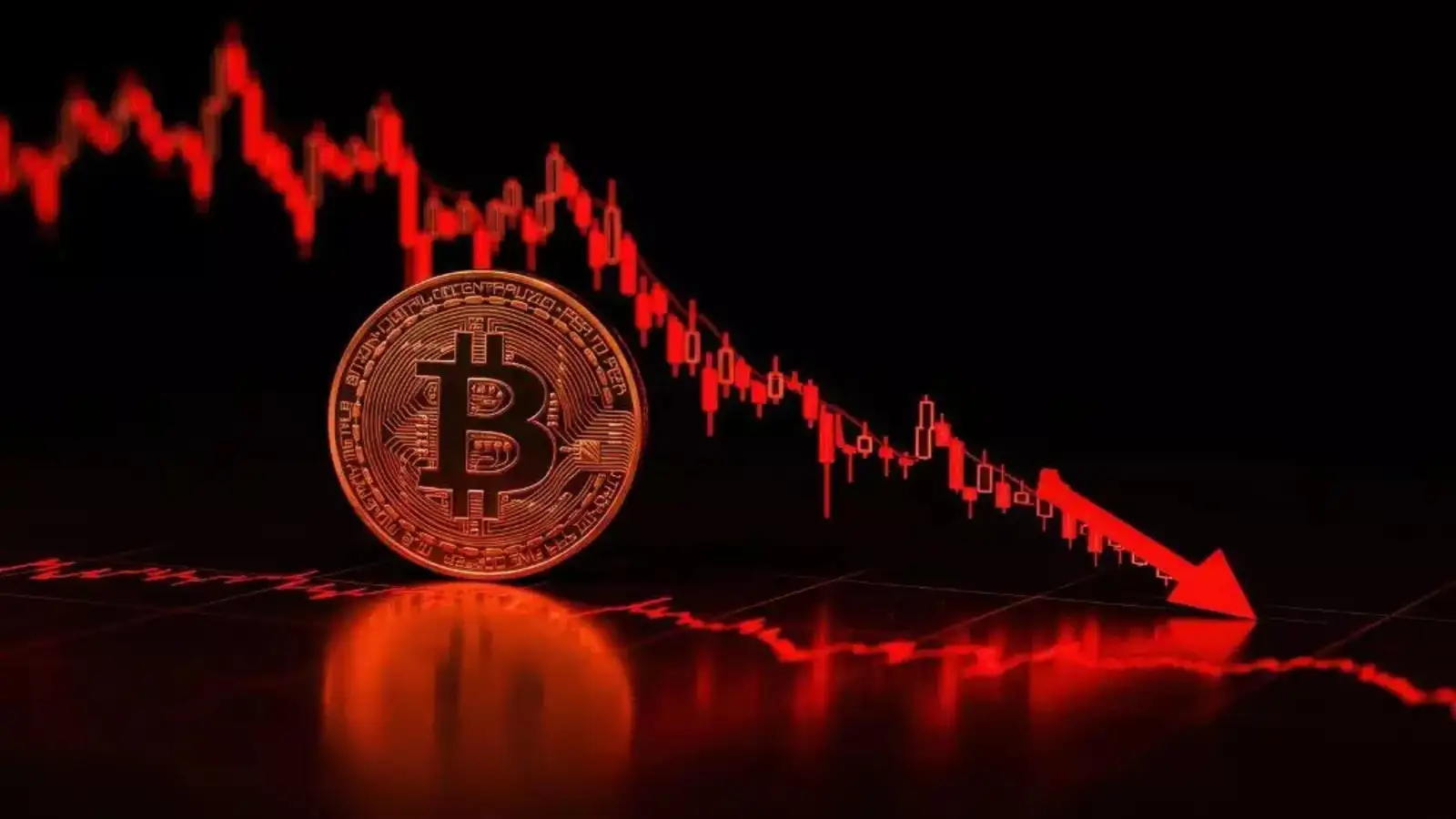
An event that significantly affects the cryptocurrency market is a Bitcoin crash. It increases volatility in the market, a decline in all digital assets, and a loss in confidence from investors. A Bitcoin crash is defined as a sudden, sharp decline in Bitcoin’s price, resulting from panic selling, negative news, and regulatory and macroeconomic uncertainties.
Sudden and extreme price declines impact all market participants, from retail traders to institutional investors. Given that Bitcoin is the largest cryptocurrency by market capitalization, the price of Bitcoin determines the price of all other cryptocurrencies. Thus, reporting, analyzing, and assessing the long-term effects of a Bitcoin crash is valuable to cryptocurrency investors, traders, and digital asset managers.
What is a Bitcoin Crash?
A Bitcoin crash is a significant and rapid decline in the price of Bitcoin. It is a sharp decline that lasts only a short period of time. Crashes are typically the result of sudden declines in the volume and trading of Bitcoin, as well as a declining fear in the market. Crashes differ from market corrections that occur in a gradual and standard fashion.
Because of the nature of a crash, it typically involves extreme financial losses, such as a decline of tens of percent over the course of a single day or week, with shorts followed by liquidations, along with a market-wide push of bearish sentiment. In the crypto markets, these periods are accompanied by extreme changes in the price of BTC.
Because of the decentralized nature of the Bitcoin market, it can be considered open and free, and because of this it allows for more room for growth, but also more volatility and extreme price changes.
Primary Reasons for Bitcoin Crashes.
1. Regulatory Fog and Actions by the Government
Regulatory actions by the government create a lot of uncertainty in the markets. When predictions, or pending actions, such as taxation, restrictions, or extremely controlling or even banning actions, create a shock of panic.
An example of this type of fog would be a country such as China with a dominating authoritarian regime, as well as extremely controlling regulations such as the SEC in the US. These types of regulations limit the confidence of the potential for adoption, as well as liquidity and the controlling of exchanges.
Regulatory and/or Government Actions in the markets are a dominant factor in the crashing of the price of Bitcoin.
2. Instability of the World Economy
Even though the potential for Bitcoin is extreme, the value of it during the world economy is extremely low, due to the fact that there is a large financial risk. Due to the world economy, there is a large potential for a financial crisis due to a large number of factors such as inflation, a rapid increase in interest rates, bank collapses, and wars/war-like situations.Bitcoin and traditional markets are correlated: when one goes down, so does the other. In a risk-off environment, investors turn to safer assets, driving selling pressure on Bitcoin.
3. Market sentiment and panic selling
Psychology plays a major role in driving the price of an asset in the crypto markets. Social media, trading forums, and other news outlets can all be battlegrounds of fear.
As soon as prices drop, a rush to sell ensues to avoid a larger loss. This panic ultimately drives the price down, and drives the price of Bitcoin down further.
4. Leverage and liquidation cascades
Leverage on trading platforms allows investors to borrow money to increase a position. This can amplify profits but also magnifies losses.
When the price of Bitcoin drops, all leveraged positions below a threshold are liquidated. This type of selling can send prices down a large amount in a very short period of time.
5. Exchange outages and thefts
In order to operate in the digital asset ecosystem, trust is a necessity. When an exchange’s data is hacked or the company goes bankrupt, trust erodes.
As trust underpins the system, concerns about the safety of funds can drive large withdrawals and heavy selling, further driving down the price of Bitcoin.
Bitcoin’s Historical Market Cycles and Crashes
Throughout Bitcoin’s history, it has endured multiple crashes, which prove the cryptocurrency market’s patterns of cycles and crashes.
- 2013 Volatility Phase: The Bitcoin market was still in its infancy and market infrastructure had not fully developed which resulted in significant price corrections.
- 2018 Bear Market: Bitcoin reached astounding price points, with its highest price being recorded in 2017. Subsequently, it experienced a protracted bear market and lost over 80% of its price.
- 2020 Global Market Panic: Bitcoin suffered a loss from a global market panic, a resultant of a worldwide pandemic. Unlike the global markets, Bitcoin was able to recover and grow substantially.
- 2022 Market Correction: The combination of the market developed policies and external market collapses resulted in a massive recession for Bitcoin and the markets.
Each of these crashes have emphasized the importance of emotional restraint and long term planning.
The Impact of a Bitcoin Crash on the Crypto Ecosystem
Impact on Other Cryptocurrencies and Crypto Assets
When Bitcoin’s price experiences a crash, many other cryptocurrencies, also called altcoins, experience larger percentage drops in price than Bitcoin. Since Bitcoin has the highest market cap, it sets the trend for the entire crypto market.
Investor Confidence and Market Sentiment
When Bitcoin prices drop, it leads to a decrease in investor confidence. There is a high level of fear, uncertainty and doubt (FUD) in the market which leads to an overall decrease in trading activity and lack of investments.
Institutional Investment Behavior
Certain institutions view market crashes and extreme volatility as short term phenomena and as such may choose to decrease their exposure. Other institutions view these market crashes as opportunities for long term accumulation.
Important Things to Note in a Bitcoin Crash
- Market cycles are a chronic inevitability: The cryptocurrency market is characterized by bull and bear cycles and a Bitcoin crash is not indicative of the market dying.
- Risk management is of utmost importance: Successful investors focus on strategies aimed at the preservation of capital as well as efforts towards the attainment of balanced investment portfolios.
Best Strategies for Investors
Diversification Strategy
Having a balanced investment portfolio reduces the exposure to any one asset. Increasing your investment portfolio to include other traditional investments such as stocks and commodities lowers the average overall risk
Dollar-Cost Averaging (DCA)
Investing a fixed amount of money at set intervals lowers the probability of losing money as a result of market volatility. It prevents investors from making big commitments to investments at the peaks of the market.
Long-Term Investment Perspective
Long-term investors take a risk when they short trade during a Bitcoin crash. They focus on the fundamentals of the blockchain system and its growth and adoption potential rather than the daily price movements.
Avoid Emotional Trading
Emotional responses, such as panic selling, usually result in buying at the peak and selling at a loss. Professional investors use extensive research, technical analysis, and have a set plan.
Long-Term Outlook/Becoming Resilient After a Bitcoin Crash
Bitcoin has crashed many times, but it has shown the ability to bounce back time and time again. In the future, the adoption of bitcoin by financial institutions in combination with developing blockchain systems and rising global consciousness will alter the potential of Bitcoin.
But, it’s clear that the global crypto market is extremely unpredictable and investors ought to set realistic goals to the degree that their exposure to risk is limited.
A bitcoin crash is a great means of testing stress in the market. Projects that are stronger and superior are those that survive the crash, while weaker projects are eliminated by the crash.
Conclusion
The crash of one bitcoin has once again provided us with the ability to assess the immense risk and volatility that is associated with the trading of cryptocurrencies. Recessions that occur in the natural cycle of the market will create fear and economic loss, but will not withstand the cyclical nature of the economy.
Investors can aid their preparedness for uncertain situations by analyzing Bitcoin crashes created by regulatory pressures, macroeconomic uncertainties, leveraged trading, and changes in market sentiment. Protectionist approaches to investing in cryptocurrencies include the three-part strategy of knowing how to manage risk and how to maintain a long time horizon.
During a Bitcoin crash, investors should refrain from acting emotionally. Instead, they should use research, implement a strategy, and engage in the financial planning to calculate the possible financial outcomes (especially, positive outcomes). Focus on research, financial planning, and strategy rather than quick reactions. In a highly volatile and uncertain environment, the most valuable assets are patience and knowledge.
FAQs
1. What is a Bitcoin crash?
A Bitcoin crash is a rapid and significant price drop. This downturn usually leads to panic selling and extreme market volatility.
2. What do Bitcoin crashes do to altcoins?
Altcoins usually drop in price by a greater percentage than Bitcoin. This is because Bitcoin’s price predominantly determines the price of all cryptocurrencies.
3. Will Bitcoin crash and then recover?
In the past, it has been observed that Bitcoin will crash and then recover. However, it is impossible to predict how long it will take to recover after a crash.
4. Should you buy Bitcoin when it crashes?
This is a highly personal question. The answer depends on the amount of risk you are willing to tolerate and your financial situation, in addition to your market analysis. From this perspective, it is possible for long-term investors.
5. How can investors reduce risk during a Bitcoin crash?
Investors can minimize risk through portfolio diversification, dollar-cost averaging, steering clear of leverage, and adopting a long-term perspective when investing.